

Genes, ethics and society
View Sequence overviewStudents will:
- physically model the process of mitosis.
- compare the processes of mitosis and meiosis.
Students will represent their understanding as they:
- record how to physically model the mitosis process.
- physically model the mitosis process.
- compare the processes of mitosis and meiosis.
In this lesson, assessment is formative.
Feedback might focus on students’ ability to:
- model the process of mitosis.
- identify the number of chromosomes before and after mitosis.
- develop a physical model of mitosis.
Potential summative task
Students working at the achievement standard should:
- explain how genetic information is retained in the process of mitosis.
- develop an explanatory model of mitosis.
- compare the similarities and differences between mitosis and meiosis.
Whole class
Genes, ethics and society Slides
Each group
Mitosis in motion Resource sheet
Each student
Student notebook
Lesson
Re-orient
Revisit the process of meiosis, which produces gametes (egg and sperm cells) with half the usual number of chromosomes.
The Inquire phase allows students to cycle progressively and with increasing complexity through the key science ideas related to the core concepts. Each Inquire cycle is divided into three teaching and learning routines that allow students to systematically build their knowledge and skills in science and incorporate this into their current understanding of the world.
When designing a teaching sequence, it is important to consider the knowledge and skills that students will need in the final Act phase. Consider what the students already know and identify the steps that need to be taken to reach the level required. How could you facilitate students’ understanding at each step? What investigations could be designed to build the skills at each step?
Read more about using the LIA FrameworkIdentifying and constructing questions is the creative driver of the inquiry process. It allows students to explore what they know and how they know it. During the Inquire phase of the LIA Framework, the Question routine allows for past activities to be reviewed and to set the scene for the investigation that students will undertake. The use of effective questioning techniques can influence students’ view and interpretation of upcoming content, open them to exploration and link to their current interests and science capital.
When designing a teaching sequence, it is important to spend some time considering the mindset of students at the start of each Inquire phase. What do you want students to be thinking about, what do they already know and what is the best way for them to approach the task? What might tap into their curiosity?
Read more about using the LIA FrameworkFertilisation
(Slide 35) Remind students that two gametes combine during fertilisation to produce a cell with 46 chromosomes.
Pose the question: How does a single fertilised cell grow into a full-sized baby?
Discuss how a single cell needs to make many identical copies of itself to produce a multicellular baby. This involves cells growing and then dividing into two cells, which means that the number of cells has multiplied.
(Slide 36) Compare the two terms “cell division” and “multiplication”, and how they are used in mathematics vs science. Emphasise that the meiosis process (explored in the previous lesson) is described as cell replication or division, even though the result of the process is that the number of cells multiplies.
Re-pose the question: How does a single fertilised cell grow into a full-sized multicellular baby?
Cell division or cell multiplication?
Students often enter science classrooms with everyday meanings for words that differ from their scientific definitions.
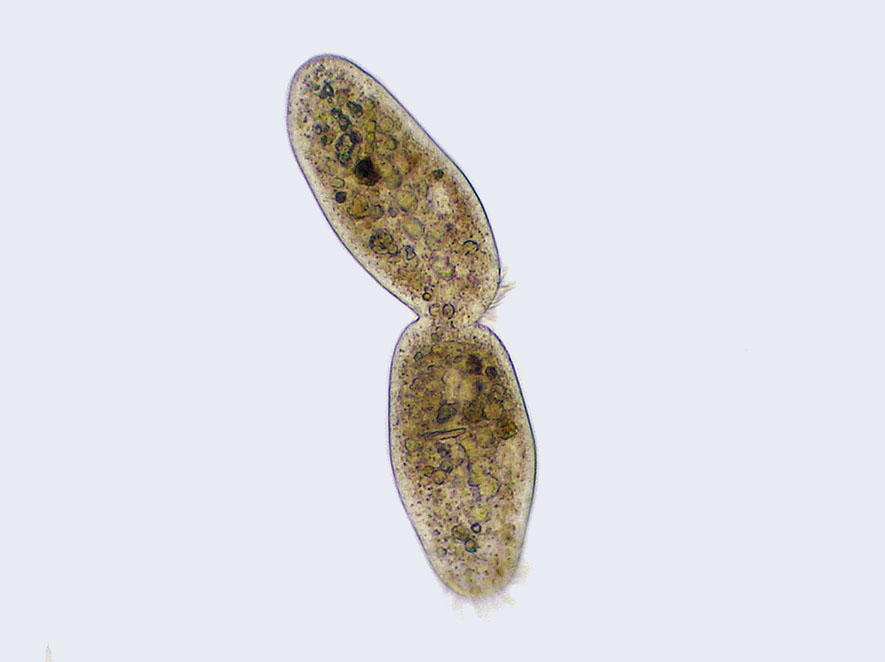
Students often enter science classrooms with everyday meanings for words that differ from their scientific definitions. This can create confusion when learning about biological processes such as mitosis. Teachers should therefore use language carefully and explicitly distinguish between informal everyday language and precise scientific terminology.
For example, mitosis is sometimes casually described as “cell multiplication” because one cell becomes two cells. While this description may seem helpful at first, it can unintentionally reinforce alternative conceptions. In everyday language, “multiplication” suggests an increase in number without emphasising the process involved. Scientifically, mitosis is more accurately described as a type of cell nucleus division in which one parent nucleus divides to produce two genetically identical nuclei in a single cell. This cell then divides into two daughter cells.
Teachers can support students to use precise terminology by:
- explicitly comparing everyday and scientific meanings of key terms.
- modelling accurate scientific vocabulary consistently.
- discussing why scientists use precise language.
- encouraging students to revise informal explanations into scientific ones.
- addressing misconceptions when simplified language is used.
For mitosis, it can be helpful to explain that:
- “cell division” describes the process of a single cell dividing into two through cytokinesis.
- “cell multiplication” describes the result but not the mechanism.
- mitosis specifically refers to nuclear division that produces genetically identical cells.
Students often enter science classrooms with everyday meanings for words that differ from their scientific definitions. This can create confusion when learning about biological processes such as mitosis. Teachers should therefore use language carefully and explicitly distinguish between informal everyday language and precise scientific terminology.
For example, mitosis is sometimes casually described as “cell multiplication” because one cell becomes two cells. While this description may seem helpful at first, it can unintentionally reinforce alternative conceptions. In everyday language, “multiplication” suggests an increase in number without emphasising the process involved. Scientifically, mitosis is more accurately described as a type of cell nucleus division in which one parent nucleus divides to produce two genetically identical nuclei in a single cell. This cell then divides into two daughter cells.
Teachers can support students to use precise terminology by:
- explicitly comparing everyday and scientific meanings of key terms.
- modelling accurate scientific vocabulary consistently.
- discussing why scientists use precise language.
- encouraging students to revise informal explanations into scientific ones.
- addressing misconceptions when simplified language is used.
For mitosis, it can be helpful to explain that:
- “cell division” describes the process of a single cell dividing into two through cytokinesis.
- “cell multiplication” describes the result but not the mechanism.
- mitosis specifically refers to nuclear division that produces genetically identical cells.
The Inquire phase allows students to cycle progressively and with increasing complexity through the key science ideas related to the core concepts. Each Inquire cycle is divided into three teaching and learning routines that allow students to systematically build their knowledge and skills in science and incorporate this into their current understanding of the world.
When designing a teaching sequence, it is important to consider the knowledge and skills that students will need in the final Act phase. Consider what the students already know and identify the steps that need to be taken to reach the level required. How could you facilitate students’ understanding at each step? What investigations could be designed to build the skills at each step?
Read more about using the LIA FrameworkThe Investigate routine provides students with an opportunity to explore the key ideas of science, to plan and conduct an investigation, and to gather and record data. The investigations are designed to systematically develop content knowledge and skills through increasingly complex processes of structured inquiry, guided inquiry and open inquiry approaches. Students are encouraged to process data to identify trends and patterns and link them to the real-world context of the teaching sequence.
When designing a teaching sequence, consider the diagnostic assessment (Launch phase) that identified the alternative conceptions that students held. Are there activities that challenge these ideas and provide openings for discussion? What content knowledge and skills do students need to be able to complete the final (Act phase) task? How could you systematically build these through the investigation routines? Are there opportunities to build students’ understanding and skills in the science inquiry processes through the successive investigations?
Read more about using the LIA FrameworkModelling mitosis
Discuss how the process of meiosis produces cells with half the number of chromosomes, to avoid an increase in the number of chromosomes across each generation, and that there needs to be a different process of cell division used when a body is growing or repairing damage.
(Slide 37) ✎ STUDENT NOTES: Define “mitosis” as the process of producing two genetically identical nuclei.
(Slide 38) Explain the movement of the chromosomes in each stage of mitosis. Briefly discuss the similarities and differences between mitosis and meiosis (this will be discussed further in the Integrate routine). Compare the number of chromosomes in the parent cell and the two daughter cells, noting that they are genetically identical.
- Why is DNA copied before mitosis begins?
- So that both daughter cells contain the same DNA and chromosomes at the end.
- How many daughter cells are produced?
- Two.
- What do you notice about the number of chromosomes before and after mitosis?
- The number of chromosomes in each cell remains the same.
- Why do the daughter cells need to have the same number of chromosomes as the parent cell?
- So that the new daughter cells have all the chromosomes that they need to function.
- Why are the daughter cells genetically identical to the parent cell?
- The number and types of chromosomes/genes/DNA (genetic material) are identical. The number of other specialised structures (the organelles) in each cell may be different, so we use the term “genetically identical”.
- What similarities do you notice between mitosis and meiosis?
- They both have the stages interphase, metaphase, anaphase and telophase before cytokinesis.
- What are the main differences between mitosis and meiosis?
- Mitosis only goes through the phases once to produce two genetically identical cells. Meiosis goes through the phases twice and produces four cells with half the genetic material.
- How many cells are produced at the end of each process?
- Mitosis produces two cells. Meiosis produces four cells.
- How does mitosis help an organism grow and repair itself?
- It produces two new cells that can help the organism increase in size or replace damaged cells.
Provide students with a copy of the Mitosis in motion Resource sheet. Ask students in groups to design a physical movement model (or dance) for each stage of the mitosis process.
✎ STUDENT NOTES: Record a physical movement for each step of the mitosis process on the Mitosis in motion Resource sheet.
Allow students time to display their “dance”.
Mitosis
Mitosis is a process of cell division that produces two genetically identical daughter nuclei from one parent nucleus.
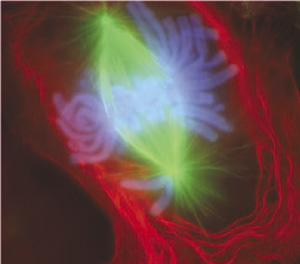
Mitosis is a process of cell division that produces two genetically identical daughter nuclei from one parent nucleus. It occurs in all cells that have a nucleus (eukaryotic cells) and is essential for growth, tissue repair, and replacement of damaged or worn-out cells.
Before mitosis begins, the cell undergoes interphase, during which it grows and carries out normal functions. Once it receives the signal to replicate, the cell makes a copy of all of its DNA. This ensures that each daughter cell receives a complete set of chromosomes.
Mitosis occurs in several stages.
1. Prophase—Chromosomes condense and become visible. The nuclear membrane begins to break down.
2. Metaphase—Chromosomes line up along the centre of the cell.
3. Anaphase—Sister chromatids (the replicated DNA) separate at the centromere and each 'daughter chromosome' moves to the opposite ends of the cell.
4. Telophase—New nuclear membranes form around each set of chromosomes.
Following mitosis, the cytoplasm divides, forming two separate daughter cells. This process is called “cytokinesis”.
The daughter cells produced by mitosis are genetically identical to the original parent cell and contain the same number of chromosomes. In humans, this means each daughter cell contains 46 chromosomes.
Mitosis is a process of cell division that produces two genetically identical daughter nuclei from one parent nucleus. It occurs in all cells that have a nucleus (eukaryotic cells) and is essential for growth, tissue repair, and replacement of damaged or worn-out cells.
Before mitosis begins, the cell undergoes interphase, during which it grows and carries out normal functions. Once it receives the signal to replicate, the cell makes a copy of all of its DNA. This ensures that each daughter cell receives a complete set of chromosomes.
Mitosis occurs in several stages.
1. Prophase—Chromosomes condense and become visible. The nuclear membrane begins to break down.
2. Metaphase—Chromosomes line up along the centre of the cell.
3. Anaphase—Sister chromatids (the replicated DNA) separate at the centromere and each 'daughter chromosome' moves to the opposite ends of the cell.
4. Telophase—New nuclear membranes form around each set of chromosomes.
Following mitosis, the cytoplasm divides, forming two separate daughter cells. This process is called “cytokinesis”.
The daughter cells produced by mitosis are genetically identical to the original parent cell and contain the same number of chromosomes. In humans, this means each daughter cell contains 46 chromosomes.
The Inquire phase allows students to cycle progressively and with increasing complexity through the key science ideas related to the core concepts. Each Inquire cycle is divided into three teaching and learning routines that allow students to systematically build their knowledge and skills in science and incorporate this into their current understanding of the world.
When designing a teaching sequence, it is important to consider the knowledge and skills that students will need in the final Act phase. Consider what the students already know and identify the steps that need to be taken to reach the level required. How could you facilitate students’ understanding at each step? What investigations could be designed to build the skills at each step?
Read more about using the LIA FrameworkFollowing an investigation, the Integrate routine provides time and space for data to be evaluated and insights to be synthesized. It reveals new insights, consolidates and refines representations, generalises context and broadens students’ perspectives. It allows student thinking to become visible and opens formative feedback opportunities. It may also lead to further questions being asked, allowing the Inquire phase to start again.
When designing a teaching sequence, consider the diagnostic assessment that was undertaken during the Launch phase. Consider if alternative conceptions could be used as a jumping off point to discussions. How could students represent their learning in a way that would support formative feedback opportunities? Could small summative assessment occur at different stages in the teaching sequence?
Read more about using the LIA FrameworkSimilarities and differences
Discuss the similarities and differences between each of the dances performed by students. Identify the similarities as the common “events” that occur in each stage of mitosis.
Discuss the advantages and limitations of using physical motion to model the movement of chromosomes during mitosis and cytokinesis. Compare modelling meiosis with pipe cleaners to modelling mitosis with physical movement.
- Can physical models make complex cellular processes easier to remember? Why or why not?
- What important cellular structures or processes are missing from the physical model?
- Students may not have been able to model DNA replication or the fibres that pull the chromosomes to the end of a cell during anaphase.
- How does the scale of the model differ from what occurs inside a real cell?
- The chromosomes in a cell can only be seen using a microscope when the cell is dead and stained. The physical model shows the movement in the process.
- What makes a scientific model useful even if it is not completely accurate?
- It can be used to explain the movement that occurs during a process. This allows a scientist to predict why and how things go wrong.
- How can we determine whether a model is a good representation of a biological process?
- A good representation should be able to communicate what happens and allow the prediction of what can go wrong.
- What improvements could be made to your physical model to better represent mitosis?
- If someone only learned mitosis through this physical model, what misconceptions might they develop?
- Students may not understand that interphase is when the DNA replicates or that mitosis is the process of nuclear division.
- What does this activity teach us about the strengths and limitations of scientific models in general?
- All models have strengths and weaknesses, and it is important to acknowledge them when using a model.
(Slide 39) As a class, fill out the table comparing the models and the similarities and differences between mitosis and meiosis.
| Mitosis | Meiosis | |
|---|---|---|
| Models | Uses the body to show the movement of chromosomes in a cell during the division of the cell nucleus Requires many people. The people taking part have difficulty seeing all the motion that occurs and therefore limit their ability to use the model for predictions | Uses pipe cleaners to show the movement of chromosomes in a cell during cell division Only one person required to model the movement (other equipment is required) Allows the producer of the model to note the movements as they occur. This allows the producer to use the model for predictions |
| Similarities | Start with DNA copying First stage has chromosomes becoming visible Use fibres to move chromosomes Have prophase, metaphase, anaphase and telophase Pass genetic information from one generation to the next | Start with DNA copying First stage has chromosomes becoming visible Use fibres to move chromosomes Have prophase, metaphase, anaphase and telophase Pass genetic information from one generation to the next |
| Differences | Growth and repair One division Two daughter cells Genetically identical to parent cell Occurs in normal body cells | Produces gametes (egg and sperm cells) Two divisions Four daughter cells with half the number of chromosomes to parent cell. Occurs in reproductive organs |
✎ STUDENT NOTES: Write the similarities and differences between mitosis and meiosis.
Discuss how mitosis shows the process of copying genes and chromosomes so that every cell in the body carries the same DNA. Discuss how the DNA in an eye cell is identical to the DNA in a finger cell. Each cell has different functions because different parts of the DNA are activated to make different proteins.
- Why is it important that each daughter cell receives a complete set of chromosomes?
- So that each cell has the genes to function properly.
- What would happen if chromosomes were not distributed equally during mitosis?
- The cell may be missing important genes for normal functioning.
- Why can daughter cells be considered genetically identical to the parent cell?
- They have an identical set of chromosomes as the parent cell.
- How does mitosis maintain the same number of chromosomes in body cells?
- The chromosomes make a copy of themselves before the cell divides. A human parent cell has 46 chromosomes, and each daughter cell has 46 chromosomes.
- Why do different body cells have the same DNA but perform different functions?
- Some of the genes are “switched off”. For example, the genes to produce teeth are not switched on in the brain.
- How successful is mitosis at preserving genetic information? Are mistakes ever made?
- Mistakes are made when the chromosomes are copied. There are groups of proteins whose role is to identify and fix mistakes in the DNA during this process.
- What mechanisms help ensure chromosomes are correctly separated during mitosis?
- The chromosomes line up during metaphase, and the spindle fibres attach to each one to prevent tangling.
- How does the inheritance of genes during mitosis differ from inheritance during meiosis?
- In mitosis, each daughter cell receives a homologous set of each chromosome (46). During meiosis, each daughter cell only receives a single copy of each chromosome (23).
- Why does mitosis produce genetically identical cells while meiosis produces genetically different cells?
- In mitosis, each daughter cell receives a homologous set of each chromosome (46). During meiosis, each daughter cell only receives a single copy of each chromosome (23).
Reflect on this lesson
You may ask students to:
- add the words “mitosis” and “fertilisation” to their glossary.
- create a flip book of the mitosis process.
- watch the video Mitosis in 3D – with chromosome bridge (0:17) and identify each stage in this real-time mitotic cell.
- describe three situations where mitosis will occur in the body.
- describe one reason why meiosis needs to be different to mitosis.
- write two questions they have about mitosis and meiosis.
Using models in science
Models can be an effective tool in science education.
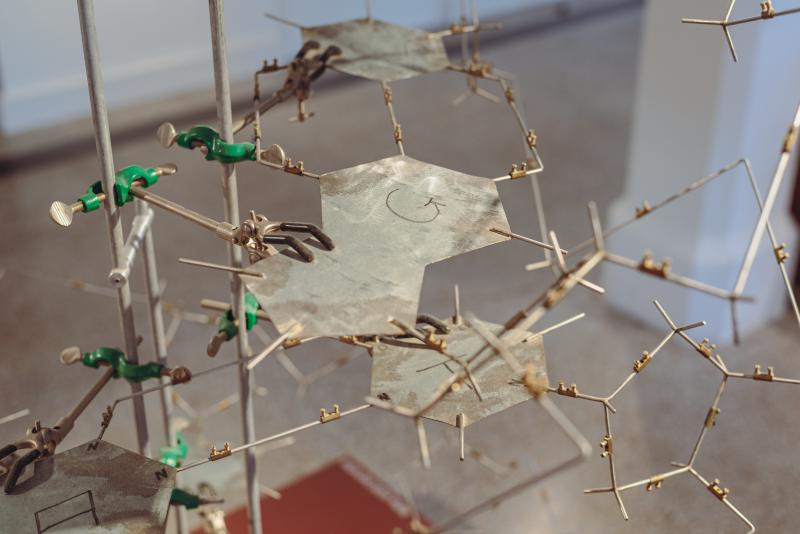
Models can be an effective tool in science education because they help students understand concepts that are too small, too large, too complex, or too abstract to observe directly.
Scientific models can take many forms, including
- physical models (such as a globe or skeleton).
- mathematical models (equations that represent relationships).
- computerised models (such as climate change simulations).
- conceptual models (such as a diagram of the water cycle).
Models are used for a variety of purposes, including breaking complex systems into manageable parts, making predictions, testing hypotheses, communicating ideas, and exploring phenomena that cannot be directly observed. For example, climate models help scientists understand weather patterns and climate change, disease-spread models predict how illnesses may move through populations, and atomic or DNA models allow students to visualise structures that are otherwise invisible.
Because all models simplify reality, no single model can fully represent a scientific concept, and multiple models are often needed to develop a deeper understanding. Effective science teaching encourages students not only to use models as learning tools but also to critically evaluate their strengths and limitations.
Students develop stronger scientific understanding when they compare models with the real-world phenomena they represent, identifying what the model explains well and where it may be inaccurate or incomplete. In this lesson, student compare physically modelling mitosis with their body to modelling meiosis with objects. The comparison between the physical model and a diagram allows students the opportunity to create, test and refine their models. This mirrors the work of scientists and supports higher-order thinking skills, helping students understand that scientific knowledge is developed through the use, evaluation, and improvement of models over time.
References
Chittleborough, G (2013). Using models in teaching and learning science. Deakin University. ttps://hdl.handle.net/10536/DRO/DU:30050568
Models can be an effective tool in science education because they help students understand concepts that are too small, too large, too complex, or too abstract to observe directly.
Scientific models can take many forms, including
- physical models (such as a globe or skeleton).
- mathematical models (equations that represent relationships).
- computerised models (such as climate change simulations).
- conceptual models (such as a diagram of the water cycle).
Models are used for a variety of purposes, including breaking complex systems into manageable parts, making predictions, testing hypotheses, communicating ideas, and exploring phenomena that cannot be directly observed. For example, climate models help scientists understand weather patterns and climate change, disease-spread models predict how illnesses may move through populations, and atomic or DNA models allow students to visualise structures that are otherwise invisible.
Because all models simplify reality, no single model can fully represent a scientific concept, and multiple models are often needed to develop a deeper understanding. Effective science teaching encourages students not only to use models as learning tools but also to critically evaluate their strengths and limitations.
Students develop stronger scientific understanding when they compare models with the real-world phenomena they represent, identifying what the model explains well and where it may be inaccurate or incomplete. In this lesson, student compare physically modelling mitosis with their body to modelling meiosis with objects. The comparison between the physical model and a diagram allows students the opportunity to create, test and refine their models. This mirrors the work of scientists and supports higher-order thinking skills, helping students understand that scientific knowledge is developed through the use, evaluation, and improvement of models over time.
References
Chittleborough, G (2013). Using models in teaching and learning science. Deakin University. ttps://hdl.handle.net/10536/DRO/DU:30050568