

'Genes, ethics and society' IS ONE OF OUR NEW TEACHING SEQUENCES FOR V9
- On the 'Sequence overview' tab you'll find all the lessons in this sequence and curriculum alignment.
- The 'Our design decisions' tab shows how key scientific ideas develop over the sequence, and shows how the sequence addresses curriculum achievement standards.
- Have you taught this sequence? Use the Feedback button to let us know how it went!
Launch
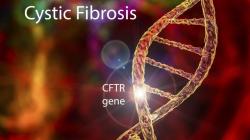
Lesson 1 • Genetic diseases
Students explore the inheritance, prevalence, diagnosis, symptoms and treatment of cystic fibrosis, a common and serious human genetic disease. They differentiate between genetic testing for diagnosis and genetic screening for predisposition.


Inquire
Lesson 2 • DNA, genes and chromosomes
Students examine the structure and function of DNA and the relationship between DNA, genes, alleles and chromosomes.

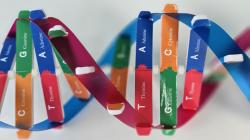
Lesson 3 • Modelling DNA
Students develop a model of the structure of DNA and compare it to previous representations.
Lesson 4 • Dividing for diversity
Students model and understand the role of meiosis and fertilisation in the inheritance of traits.
Lesson 5 • Mitosis, growth and repair
Students develop a physical model of mitosis and compare it to the previous model of meiosis.

Lesson 6 • Visible traits
Students explore how an individual’s phenotype can be influenced by their genotype and their environment. They examine how inheritance of a particular phenotype is independent of previous events.

Lesson 7 • Predicting inheritance
Students use Punnett squares to predict monogenic inheritance patterns and determine the probability of inheriting a homozygous or heterozygous genotype.
Lesson 7A • How much does screening cost?
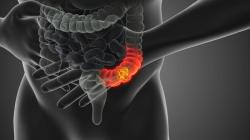
Students will explore the financial benefits of medical screening tests by examining the cost of bowel cancer screening tests and the treatment costs of early and late detection of bowel cancer.
Act
Lesson 8 • Genetic counselling
Students consolidate their learning by using their understanding of cystic fibrosis and inheritance patterns to justify an evidence-based decision about a cystic fibrosis ethical issue. Students use their understanding of genetics to prepare a brochure for parents considering genetic screening.
The Australian Academy of Science supports and encourages broad use of its material. Unless indicated below, copyright material available on this website is licensed under a Creative Commons Attribution-NonCommercial-ShareAlike 4.0 International (CC BY-NC-SA 4.0) licence.
Curriculum and syllabus alignment
Year 10
By the end of Year 10, students explain the processes that underpin heredity and genetic diversity. Students analyse the importance of publication and peer review in the development of scientific knowledge and analyse the relationship between science, technologies and engineering. They analyse the key factors that influence interactions between science and society.
Students plan and conduct safe, valid and reproducible investigations to test relationships or develop explanatory models. They explain how they have addressed any ethical and intercultural considerations when generating or using primary and secondary data. They select equipment and use it efficiently to generate and record appropriate sample sizes and replicable data with precision. They select and construct effective representations to organise, process and summarise data and information. They analyse and connect a variety of data and information to identify and explain patterns, trends, relationships and anomalies. They evaluate the validity and reproducibility of methods, and the validity of conclusions and claims. They construct logical arguments based on analysis of a variety of evidence to support conclusions and evaluate claims. They select and use content, language and text features effectively to achieve their purpose when communicating their ideas, findings and arguments to diverse audiences.
Science understanding
Explain the role of meiosis and mitosis and the function of chromosomes, DNA and genes in heredity and predict patterns of Mendelian inheritance
Science as a human endeavour
Science inquiry
Develop investigable questions, reasoned predictions and hypotheses to test relationships and develop explanatory models
Plan and conduct valid, reproducible investigations to answer questions and test hypotheses, including identifying and controlling for possible sources of error and, as appropriate, developing and following risk assessments, considering ethical issues, and addressing key considerations regarding heritage sites and artefacts on Country/Place
Select and use equipment to generate and record data with precision to obtain useful sample sizes and replicable data, using digital tools as appropriate
Select and construct appropriate representations, including tables, graphs, descriptive statistics, models and mathematical relationships, to organise and process data and information
Analyse and connect a variety of data and information to identify and explain patterns, trends, relationships and anomalies
Assess the validity and reproducibility of methods and evaluate the validity of conclusions and claims, including by identifying assumptions, conflicting evidence and areas of uncertainty
Construct arguments based on analysis of a variety of evidence to support conclusions or evaluate claims, and consider any ethical issues and cultural protocols associated with accessing, using or citing secondary data or information
Write and create texts to communicate ideas, findings and arguments effectively for identified purposes and audiences, including selection of appropriate content, language and text features, using digital tools as appropriate
Australian curriculum content links
Science understanding core concepts:
|
| Sub-strand | Content descriptor | AC code | Achievement standard | Elaboration/application |
| SHE: Nature and development of science | Explain how scientific knowledge is validated and refined, including the role of publication and peer review. | AC9S10H01 | Students analyse the importance of publication and peer review in the development of scientific knowledge. | Students examine the eugenics movement in the early 20th century and the role of validated science and peer review in the implementation of genetic screening (Lesson 7A and 8). |
| SHE: Nature and development of science | Investigate how advances in technologies enable advances in science, and how science has contributed to developments in technologies and engineering. | AC9S10H02 | Students analyse the relationship between science, technology and engineering. | Students explain how advances in gene sequencing have increased the range of genetic tests for diseases and predispositions that are available to individuals (Lesson 3 and 8). |
| SHE: Use and influence of science | Analyse the key factors that contribute to science knowledge and practices being adopted more broadly by society. | AC9S10H03 | Students analyse the key factors that influence interactions between science and society. | Students discuss examples of the application of genetic screening and reasons for the adoption of the practice by groups in society (Lessons 1, 7A and 8). |
| SHE: Use and influence of science | Examine how the values and needs of society influence the focus of scientific research. | AC9S10H04 | Students analyse the key factors that influence interactions between science and society. | Students consider the use of genetic testing for decisions such as genetic counselling, embryo selection, identification of carriers of genetic mutations and the use of this information for personal use or by organisations such as insurance companies or medical facilities (Lessons 1, 7A and 8). |
| SU: Biological sciences | Explain the role of meiosis and mitosis and the function of chromosomes, DNA and genes in heredity and predict patterns of Mendelian genetics. | ACS9S10UO1 | Students explain the processes that underpin heredity and genetic diversity and describe the evidence. | Students use models and diagrams to represent the relationship between genes, chromosomes, and DNA of an organism’s genome (Lessons 2-4). They explain how genetic information passed on to offspring from both parents by meiosis and fertilisation increases the variation of a species (Lessons 3 and 4). Students use Mendelian inheritance to predict the ratio of offspring genotypes and phenotypes in monohybrid crosses involving alleles for dominant and recessive traits (Lessons 5 and 6). They use Punnett squares to show patterns of inheritance of simple dominant and recessive characteristics (Lessons 5 and 6). Students explore the role of DNA in cancer or genetic disorders such as sickle cell anaemia and cystic fibrosis (Lessons 1-8). |
| SI: Questioning and predicting | Develop investigable questions, reasoned predictions and hypotheses to test relationships and develop explanatory models. | AC9S10I01 | Students develop analogies of DNA and models of meiosis and mitosis (Lessons 2-4). | |
| SI: Planning and conducting | Plan and conduct valid, reproducible investigations to answer questions and test hypotheses, including identifying and controlling for possible sources of error and, as appropriate, developing and following risk assessments, considering ethical issues, and addressing key considerations regarding heritage sites and artefacts on Country/Place. | AC9S10I02 | They explain how they have addressed any ethical and intercultural considerations when generating or using primary and secondary data. | Students compare the possible effects of probability of inheritance and actual inheritance, ensuring these are accounted for in planned methods for data collection and analysis (Lesson 7). They address ethical issues when examining the role of genetic counsellors in advising patients before genetic testing (Lesson 8). |
| SI: Planning and conducting | Select and use equipment to generate and record data with precision to obtain useful sample sizes and replicable data, using digital tools as appropriate. | AC9S10I03 | Students plan and conduct safe, valid and reproducible investigations to test relationships or develop explanatory models. | Students understand that large sample sizes are needed to improve reliability and reach valid conclusions (Lesson 5). |
| SI: Processing, modelling and analysing | Select and construct appropriate representations, including tables, graphs, descriptive statistics, models and mathematical relationships, to organise and process data and information. | AC9S10I04 | Students select and construct effective representations to organise, process and summarise data and information. | Students consider how data or information can be organised and represented to effectively communicate support for conclusions, including through visual or interactive models (Lessons 3-8). |
| SI: Processing, modelling and analysing | Analyse and connect a variety of data and information to identify and explain patterns, trends, relationships and anomalies. | AC9S10I05 | Students analyse and connect a variety of data and information to identify and explain patterns, trends, relationships and anomalies. | Students explore how different interpretations can be made from data that is organised or processed in different ways, and the implications of this for data analysis (Lesson 7A). They select and construct appropriate representations, including tables, graphs, descriptive statistics, models and mathematical relationships, to organise and process data and information (Lesson 3-7A). |
| SI: Evaluating | Assess the validity and reproducibility of methods and evaluate the validity of conclusions and claims, including by identifying assumptions, conflicting evidence and areas of uncertainty. | AC9S10I06 | Students evaluate the validity and reproducibility of methods, and the validity of conclusions and claims. | Students examine several examples of ‘poor’ genetic testing brochures and how these reports might be interpreted by the public (Lesson 8). They consider how data variation can indicate uncertainty and might affect confidence in conclusions reached and claims made (Lesson 7). Students use reasoning from a range of evidence to support or rebut claims made in genetic counselling brochures (Lesson 8). |
| SI: Evaluating | Construct arguments based on analysis of a variety of evidence to support conclusions or evaluate claims, and consider any ethical issues and cultural protocols associated with accessing, using or citing secondary data or information. | AC9S10I07 | They construct logical arguments based on analysis of a variety of evidence to support conclusions and evaluate claims. | Students construct a scientific argument showing how a range of evidence supports a claim relating to genetic testing (Lesson 8). They examine secondary data to determine the credibility of the source, the validity and reproducibility of the data, and identify the extent to which the data is consistent with data from other sources (Lesson 7A). |
| SI: Communicating | Write and create texts to communicate ideas, findings and arguments effectively for identified purposes and audiences, including selection of appropriate content, language and text features, using digital tools as appropriate. | AC9S10I08 | They select and use content, language and text features effectively to achieve their purpose when communicating their ideas, findings and arguments to diverse audiences. | Students examine how scientific texts develop arguments; considering the structure of the text, the selection of content and the use of language and text features; reflecting on how these might be modified for different audiences (Lesson 8). |
Teaching notes
- While this teaching sequence covers many of the requirements of the Australian Curriculum—Biological sciences, it may not meet all requirements for individual states. If required, add additional Inquire phase lessons as appropriate.
- Read through the teaching sequence.
- Note any adaptations you would like to make to suit your school’s and students’ context.
- Check that your IT department will allow access to YouTube and other videos.
- Complete the ordering of materials (if required).
- Students will have been taught underpinning concepts in Year 7-9 biological science. In Year 7, students learn that living things are made up of cells. In Year 8, students learn about the function and location of DNA in the nucleus of cells. In Year 9, students learn about sexual reproduction and male and female gametes.
- In this teaching sequence, to limit the breadth of the topic, sex-linked inherited diseases such as haemophilia and fragile X syndrome and chromosomal disorders such as Down syndrome have not been included as examples in Lessons 1 and 3. Similarly, sex-linked inheritance is not included in the Punnett square examples in Lesson 6.
- When teaching this sequence, be aware that some students may have personal or family experience with genetic diseases. Be sensitive to students who may or may not wish to discuss their experiences.
- In Lesson 3, students record the presence of a range of inherited traits. Be aware that some children may be adopted or conceived through IVF or sperm donation. There may be students who are in foster care or stepfamilies and do not share traits with parents or siblings. They may not resemble their parents in these traits.
Lab tech notes
As required in all states, teachers must prepare their risk assessments of the activities. Some of the equipment that needs to be considered is listed below.
Lesson 1
- Sticky notes
Lesson 2
For each group
- 4 x balls of wool in different colours (two colours should be different shades of the same colour e.g. light blue and dark blue)
- Scissors
- Coloured pencils
- Optional: 2 x m of cotton
Lesson 3
For each team
- 4 x pipe cleaners
- 4 x paper straws in different colours
- Scissors
Lesson 4
For each team
- 8 x pipe cleaners (4 each of 2 different colours)
- Masking tape
- A3 or A4 paper
- Scissors
Lesson 6
For each student
- Student notebook
- Access to Pigeonetics website
Lesson 7
For each team
- 2 x coloured counters
- Permanent marker
Lesson 7A
- Sticky notes

'Genes, ethics and society' IS ONE OF OUR NEW TEACHING SEQUENCES FOR V9
- On the 'Sequence overview' tab you'll find all the lessons in this sequence and curriculum alignment.
- The 'Our design decisions' tab shows how key scientific ideas develop over the sequence, and shows how the sequence addresses curriculum achievement standards.
- Have you taught this sequence? Use the Feedback button to let us know how it went!