

Tectonic collision course
View Sequence overviewStudents will:
- empathise with people experiencing earthquakes.
- use digital platforms to identify historical earthquake data.
- identify the relative frequencies of earthquakes in Australia.
Students will represent their understanding as they:
- empathise with people experiencing an earthquake.
- describe the impact of earthquakes.
- identify the frequency of earthquakes in the Ring of Fire.
- identify the decreased frequency of earthquakes in Australia.
In the Launch phase, assessment is diagnostic.
Take note of:
- do students identify that earthquakes occur in Australia?
- can students make a claim backed by evidence and reasoning?
- how much do students know about tectonic plates and their boundaries?
Whole class
Tectonic collision course Resource PowerPoint
Access to internet for ARGIS and Geoscience Australia
Access to video clips of people experiencing earthquakes, for example:
- Earthquake hits NSW’s Hunter Valley | 9 News Australia (3:34 min)
- See the global impact of the sixth-largest earthquake ever (4:16 min)
- If earthquakes have recently been experienced nearby, substitute with local videos.
Each group
Sticky notes
A3 or butcher paper
Pens or pencils
Each student
Individual science notebook
Lesson
The Launch phase is designed to increase the science capital in a classroom by asking questions that elicit and explore students’ experiences. It uses local and global contexts and real-world phenomena that inspire students to recognise and explore the science behind objects, events and phenomena that occur in the material world. It encourages students to ask questions, investigate concepts, and engage with the Core Concepts that anchor each unit.
The Launch phase is divided into four routines that:
- ensure students experience the science for themselves and empathise with people who experience the problems science seeks to solve (Experience and empathise)
- anchor the teaching sequence with the key ideas and core science concepts (Anchor)
- elicit students’ prior understanding (Elicit)
- and connect with the students’ lives, languages and interests (Connect).
Students arrive in the classroom with a variety of scientific experiences. This routine provides an opportunity to plan for a common shared experience for all students. The Experience may involve games, role-play, local excursions or yarning with people in the local community. This routine can involve a chance to Empathise with the people who experience the problems science seeks to solve.
When designing a teaching sequence, consider what experiences will be relevant to your students. Is there a location for an excursion, or people to talk to as part of an incursion? Are there local people in the community who might be able to talk about what they are doing? How could you set up your classroom to broaden the students’ thinking about the core science ideas? How could you provide a common experience that will provide a talking point throughout the sequence?
Read more about using the LIA FrameworkEarthquake empathy
Pose the question: Has anyone ever experienced an earthquake?
Explore what happened to any affected students and what they felt as a result of their experience.
Pose the question: What would happen if we had an earthquake here today?
(Slide 3) Discuss how the Earth can move up and down or side to side in an Earthquake. Divide the students into smaller groups and ask them to write a series of predictions answering the questions: During an earthquake, what would happen to...
- ...the classroom (the shelves, chairs, tables, lights)?
- ...the school grounds/sports courts?
- ...the electricity and water supply?
- ...the roads?
- ...the shops and supermarkets.?
✎ STUDENT NOTES: Students write predictions for what would happen in each of the situations mentioned.
(Slide 4) Provide groups of students with a large piece of butcher’s paper, separated into quadrants.
✎ STUDENT NOTES: Students label each quadrant ‘Say’, ‘Do’, ‘Think’ and ‘Feel’ and add how people would react during an earthquake.
Watch the below videos (or substitute with local ones) showing the impact of earthquakes. Encourage students to watch what people say or do as an indication of what they are thinking and feeling.
- Earthquake hits NSW’s Hunter Valley | 9 News Australia (3:34 min)
- See the global impact of the sixth-largest earthquake ever (4:16 min)
Pose the question: Where do most earthquakes occur?
The Launch phase is designed to increase the science capital in a classroom by asking questions that elicit and explore students’ experiences. It uses local and global contexts and real-world phenomena that inspire students to recognise and explore the science behind objects, events and phenomena that occur in the material world. It encourages students to ask questions, investigate concepts, and engage with the Core Concepts that anchor each unit.
The Launch phase is divided into four routines that:
- ensure students experience the science for themselves and empathise with people who experience the problems science seeks to solve (Experience and empathise)
- anchor the teaching sequence with the key ideas and core science concepts (Anchor)
- elicit students’ prior understanding (Elicit)
- and connect with the students’ lives, languages and interests (Connect).
Science education consists of a series of key ideas and core concepts that can explain objects, events and phenomena, and link them to the experiences encountered by students in their lives. The purpose of the Anchor routine is to identify the key ideas and concepts in a way that builds and deepens students’ understanding. During the Launch phase, the Anchor routine provides a lens through which to view the classroom context, and a way to frame the key knowledge and skills students will be learning.
When designing a teaching sequence, consider the core concepts and key ideas that are relevant. Break these into small bite-sized pieces that are relevant to the age and stage of your students. Consider possible alternative concepts that students might hold. How could you provide activities or ask questions that will allow students to consider what they know?
The Elicit routine provides opportunities to identify students’ prior experiences, existing science capital and potential alternative conceptions related to the Core concepts. The diagnostic assessment allows teachers to support their students to build connections between what they already know and the teaching and learning that occurs during the Inquire cycle.
When designing a teaching sequence, consider when and where students may have been exposed to the core concepts and key ideas in the past. Imagine how a situation would have looked without any prior knowledge. What ideas and thoughts might students have used to explain the situation or phenomenon? What alternative conceptions might your students hold? How will you identify these?
The Deep connected learning in the ‘Pedagogical Toolbox: Deep connected learning’ provides a set of tools to identify common alternative conceptions to aid teachers during this routine.
Read more about using the LIA FrameworkMapping earthquakes
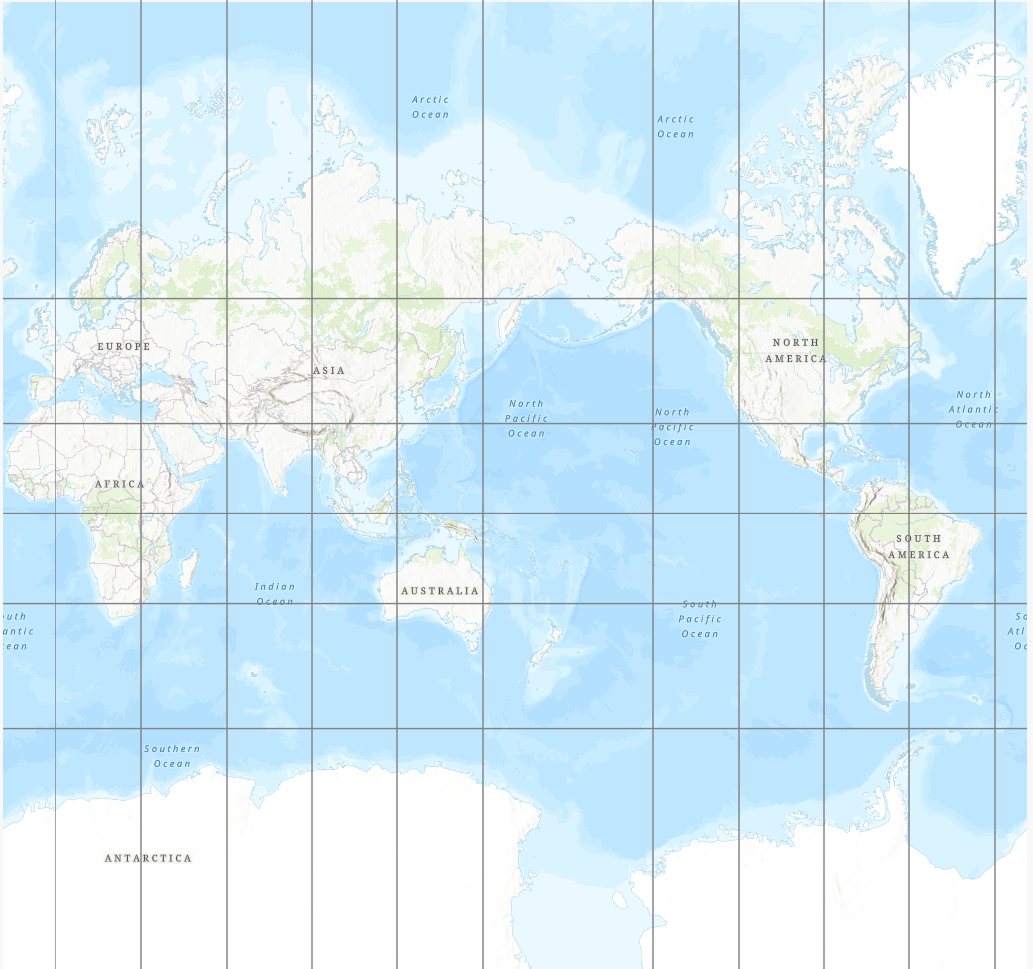
Show students the World Latitude and Longitude Grids in the ARCGIS map viewer.
(Slide 5) Bring Australia into the centre of the screen by clicking and dragging on the map. This allows the Pacific Ocean to be seen clearly.
In the Layers menu in the sidepane, select ‘Add’ and then search ‘Earthquakes’. The feature layer ‘Recent Earthquakes’ should be visible in the results.
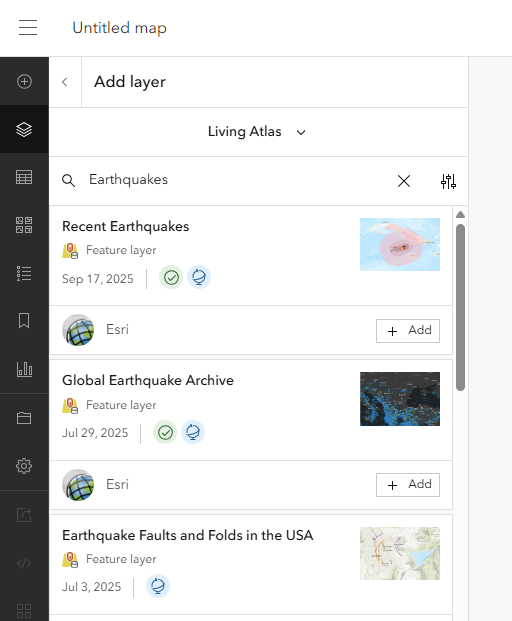
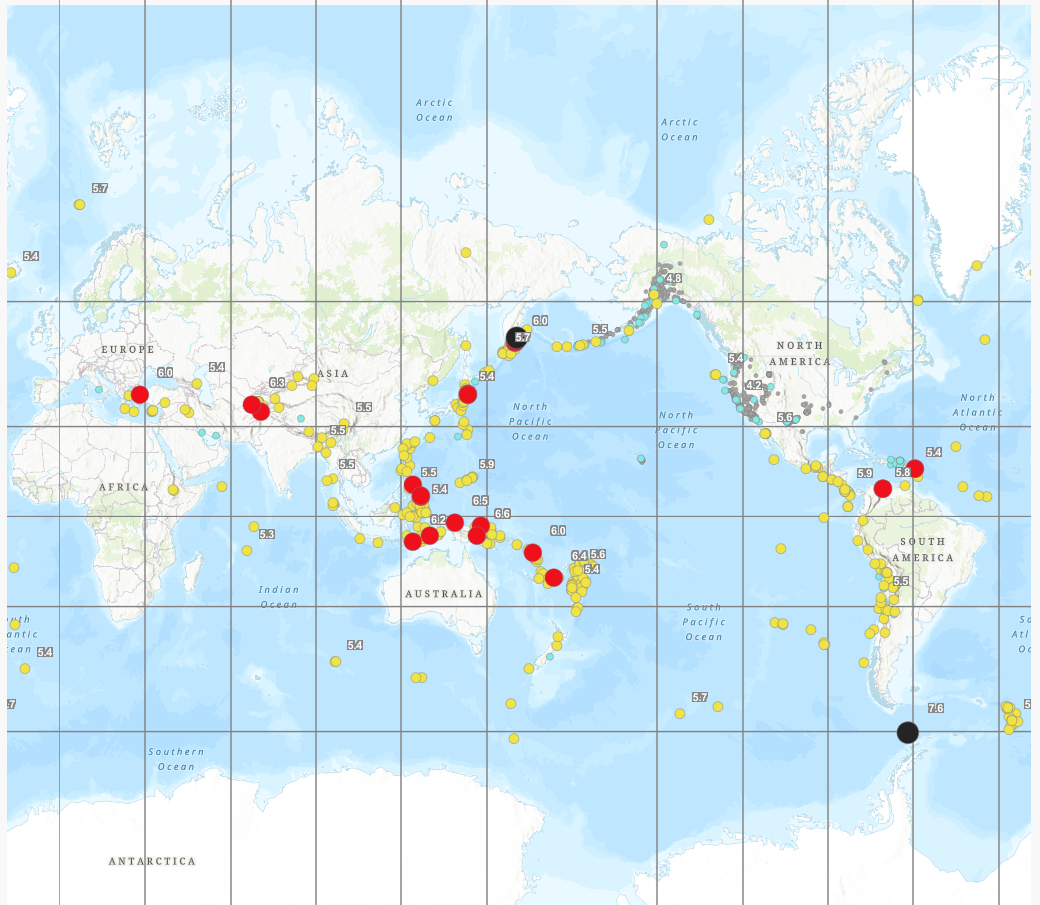
Select ‘+ Add’ to add ‘Recent Earthquakes’ as a layer to the world map. This shows all earthquakes that have been recorded in the past 30 days (or 90 days in the case of a highly significant earthquake).
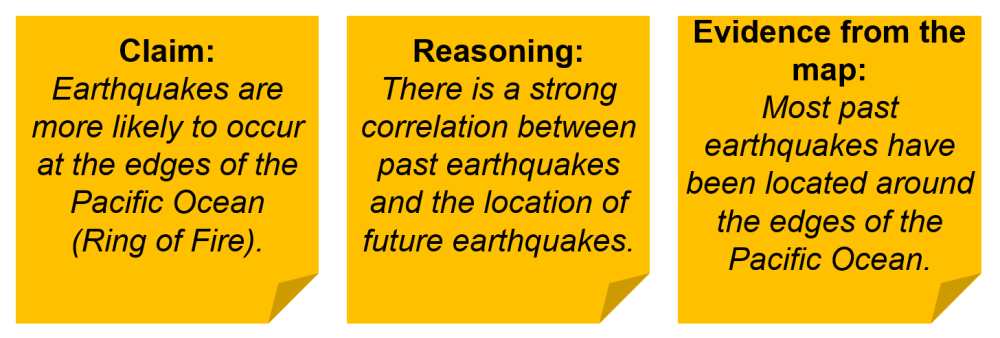
(Slide 6) Discuss how argumentation is a way to describe what students notice in order to make a claim. This claim needs to be supported using evidence from the map and reasoning that links the claim to the evidence.
✎ STUDENT NOTES: Use the plotted earthquake data on the map to write a claim about where earthquakes are most likely to occur.
(Slide 7) Once students have made a claim, draw students’ attention to the Ring of Fire around the Pacific Ocean as a frequent location of earthquakes.
Discuss how many of the earthquakes shown on the map are located in the Ring of Fire, a horseshoe-shaped zone around the Pacific Ocean that is known for frequent earthquakes and volcanic eruptions. It contains about 75% of the world’s active volcanoes and 90% of its earthquakes.
Discuss how this historical evidence of earthquakes indicates a correlation between earthquakes and the Ring of Fire, but does not show that the Ring of Fire causes earthquakes. They will learn the cause of earthquakes in the next few lessons.
Core concepts and key ideas
When planning for teaching in your classroom, it can be useful to see where a sequence fits into the larger picture of science.

When planning for teaching in your classroom, it can be useful to see where a sequence fits into the larger picture of science. This unit is anchored to the Science Understanding core concepts for Earth and space sciences.
- The Earth system comprises dynamic and interdependent systems. Interactions between these systems cause continuous change over a range of scales. All living things are connected through Earth’s systems and depend on sustainability of the Earth system.
By Year 8, students have already describe daily and seasonal changes in the environment (Year 1), compared the properties of soils, rocks and minerals (Year 3), described the key processes in the water cycle (Year 4), and described how weathering, erosion, transportation and deposition cause slow or rapid change to Earth’s surface (Year 5).
In Year 8, students investigate tectonic activity including the formation of geological features at divergent, convergent and transform plate boundaries and describe the scientific evidence for the theory of plate tectonics and describe the key processes of the rock cycle, including the timescales over which they occur, and examine how the properties of sedimentary, igneous and metamorphic rocks reflect their formation and influence their use.
This core concept is linked to the key science ideas:
- Structures and systems can be analysed to determine how they function (Form and function).
- Phenomena that can be observed at one scale may not be observed at another scale (Scale and measurement).
- Stability and change in systems can be explained by considering relationships between matter, energy and forces at different scales (Stability and change).
- Changes in one part of a system may cause changes in another part of the system (Stability and change).
- The transfer of energy drives the motion and/or cycling of matter (Matter and energy).
- Systems may interact with other systems, have sub-systems and be part of larger complex systems (Systems).
- Models can be used to represent systems with defined boundaries, their inputs, processes and outputs (Systems).
- Models can be used to make predictions about how systems behave and the impact of change (Systems).
When your students next progress through this core concept, they will represent the carbon cycle and examine how key processes rely on interactions between Earth’s spheres (Year 9).
When planning for teaching in your classroom, it can be useful to see where a sequence fits into the larger picture of science. This unit is anchored to the Science Understanding core concepts for Earth and space sciences.
- The Earth system comprises dynamic and interdependent systems. Interactions between these systems cause continuous change over a range of scales. All living things are connected through Earth’s systems and depend on sustainability of the Earth system.
By Year 8, students have already describe daily and seasonal changes in the environment (Year 1), compared the properties of soils, rocks and minerals (Year 3), described the key processes in the water cycle (Year 4), and described how weathering, erosion, transportation and deposition cause slow or rapid change to Earth’s surface (Year 5).
In Year 8, students investigate tectonic activity including the formation of geological features at divergent, convergent and transform plate boundaries and describe the scientific evidence for the theory of plate tectonics and describe the key processes of the rock cycle, including the timescales over which they occur, and examine how the properties of sedimentary, igneous and metamorphic rocks reflect their formation and influence their use.
This core concept is linked to the key science ideas:
- Structures and systems can be analysed to determine how they function (Form and function).
- Phenomena that can be observed at one scale may not be observed at another scale (Scale and measurement).
- Stability and change in systems can be explained by considering relationships between matter, energy and forces at different scales (Stability and change).
- Changes in one part of a system may cause changes in another part of the system (Stability and change).
- The transfer of energy drives the motion and/or cycling of matter (Matter and energy).
- Systems may interact with other systems, have sub-systems and be part of larger complex systems (Systems).
- Models can be used to represent systems with defined boundaries, their inputs, processes and outputs (Systems).
- Models can be used to make predictions about how systems behave and the impact of change (Systems).
When your students next progress through this core concept, they will represent the carbon cycle and examine how key processes rely on interactions between Earth’s spheres (Year 9).
Argumentation
Argumentation is the process of systematically providing reasoning to support a claim.
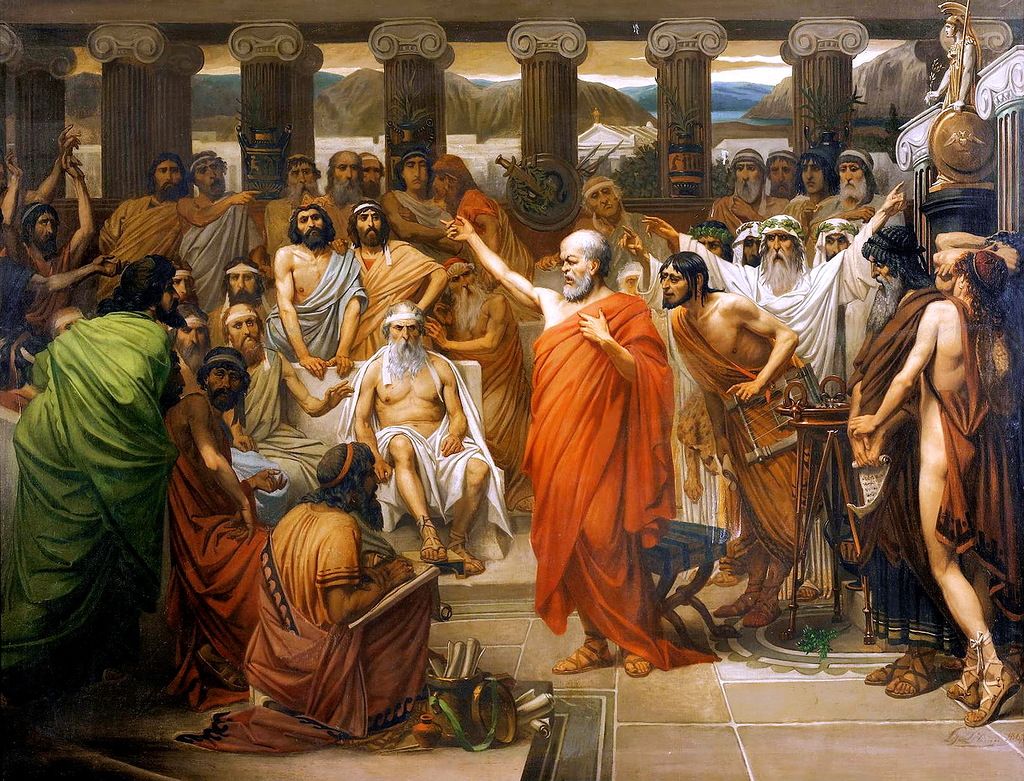
Argumentation is the process of systematically providing reasoning to support a claim. Unlike the commonly used negative term ‘argument’, argumentation involves developing a valid argument or persuasive idea.
At the simplest level, students should be able to provide a claim, evidence, and reasoning. At higher levels, students will be able to identify the limitations of a claim, the underlying assumptions that back the claim, and provide a rebuttal for any counterclaims.
In this lesson, students are using the evidence from recent earthquakes and comparing it to historical data to determine the accuracy of their claim.
Argumentation is the process of systematically providing reasoning to support a claim. Unlike the commonly used negative term ‘argument’, argumentation involves developing a valid argument or persuasive idea.
At the simplest level, students should be able to provide a claim, evidence, and reasoning. At higher levels, students will be able to identify the limitations of a claim, the underlying assumptions that back the claim, and provide a rebuttal for any counterclaims.
In this lesson, students are using the evidence from recent earthquakes and comparing it to historical data to determine the accuracy of their claim.
The Launch phase is designed to increase the science capital in a classroom by asking questions that elicit and explore students’ experiences. It uses local and global contexts and real-world phenomena that inspire students to recognise and explore the science behind objects, events and phenomena that occur in the material world. It encourages students to ask questions, investigate concepts, and engage with the Core Concepts that anchor each unit.
The Launch phase is divided into four routines that:
- ensure students experience the science for themselves and empathise with people who experience the problems science seeks to solve (Experience and empathise)
- anchor the teaching sequence with the key ideas and core science concepts (Anchor)
- elicit students’ prior understanding (Elicit)
- and connect with the students’ lives, languages and interests (Connect).
Each student comes to the classroom with experiences made up from science-related knowledge, attitudes, experiences and resources in their life. The Connect routine is designed to tap into these experiences and that of their wider community. It is also an opportunity to yarn with community leaders (where appropriate) to gain an understanding of the student’s lives, languages and interests. In the Launch phase, this routine identifies and uses the science capital of students as the foundation of the teaching sequence so students can appreciate the relevance of their learning and its potential impact on future decisions. In short, this routine moves beyond scientific literacy and increases the science capital in the classroom and science identity of the students.
When planning a teaching sequence, take an interest in the lives of your students. What are their hobbies, how do they travel to and from school? What might have happened in the lives of your students (i.e. blackouts) that might be relevant to your next teaching sequence? What context might be of interest to your students?
Read more about using the LIA FrameworkEarthquakes in Australia
(Slide 8) Pose the questions: Is Australia in the Ring of Fire? Does that mean we don’t have to worry about earthquakes?
(Slide 9) Invite students to go to the Geoscience Australia monitoring website and select Recent Earthquakes > 30 days (in the top right menu) to view recent earthquakes in Australia. Many of these earthquakes would not have been visible in the ARCGIS map as their magnitude is too low.
(Slide 10) Discuss the locations of the most recent earthquakes in Australia over the last 30 days.
- Have earthquakes ever occurred near where we live? How might that influence our understanding of risk?
- If an earthquake happened here, what parts of our town (or school) do you think would be most affected?
- Why do people often think “Australia doesn’t get earthquakes”? What misconceptions exist?
- If you were in charge of planning for natural hazards in your state, how important would earthquakes be on your priority list?
Explain that over the next few lessons, students will explore the science behind earthquakes and how geophysicists use scientific modelling and technology to understand what is happening below the surface of the Earth.
Discuss how geologists around the world share data on earthquakes and volcanoes in the hope that one day they might be able to predict the locations and strength of an earthquake.
Reflect on the lesson
You might invite students to:
- identify the last earthquake that was in your state.
- write down three things they thought they knew about earthquakes, two things that they learned today, and one question that they still have about earthquakes.
- research what people in earthquake-prone areas are taught to do in the event of an earthquake.
Earthquakes in Australia
Australia is often described as tectonically ‘quiet’ because it sits far from the edges of tectonic plates, but it is not earthquake-free.
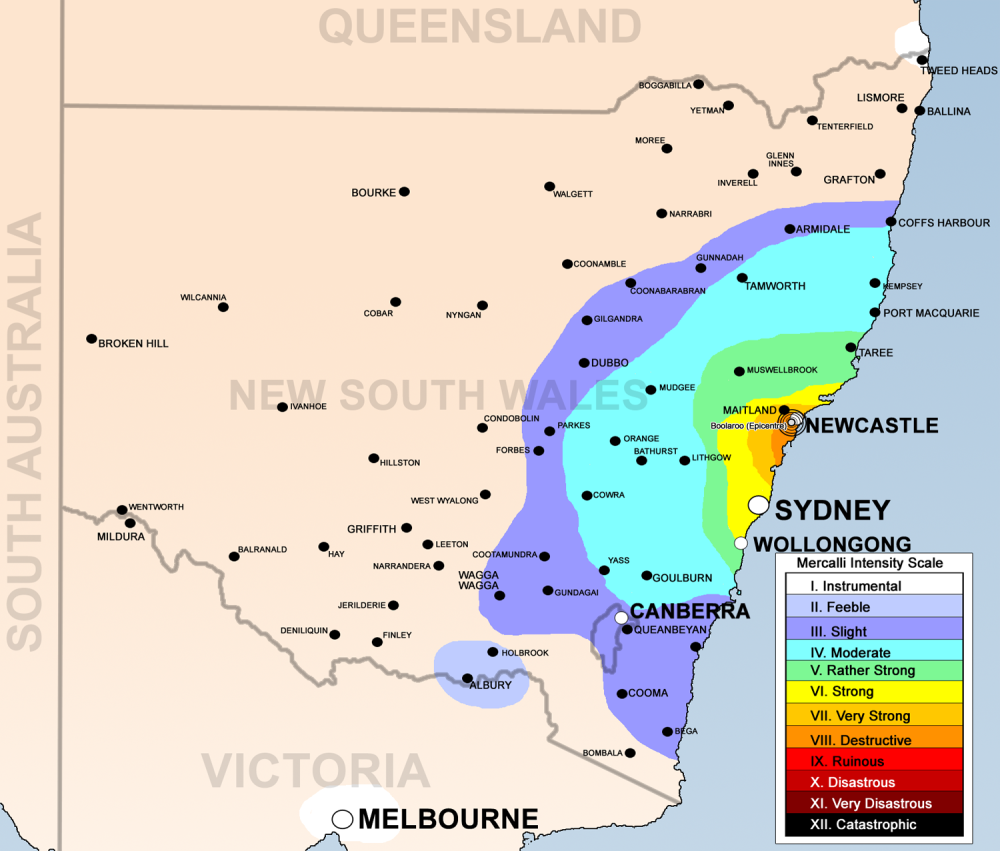
Australia is often described as tectonically ‘quiet’ because it sits far from the edges of tectonic plates, but it is not earthquake-free. Earthquakes do occur across the continent, and Australia has many recent faults and a well-documented history of seismic activity.
On average, Australia experiences an earthquake larger than magnitude 6 about once every seven years, and a magnitude 5 or greater earthquake roughly once a year. Geological evidence suggests the continent could experience earthquakes as large as magnitude 7.5.
Earthquakes in Australia are driven by stress within the Indo-Australian Plate, caused by forces from surrounding plate boundaries. Even though these boundaries are distant, the stresses they generate travel deep into the plate and gradually build up. When the stress becomes too great, it is released along weaknesses in the crust known as fault zones, producing earthquakes.
Scientific studies over the past 40 years have mapped these stresses using earthquake data, boreholes, mining activity, and large engineering projects. This work has been compiled into the Australian Stress Map. This map shows that stress patterns across Australia are complex and variable, with directions that change across the continent as a result of the many forces acting at the edges of the Indo-Australian Plate.
Rajabi, M., Ninis, D., & Abbas Babaahmadi. (2025). Why does Australia have earthquakes? The whole continent is under stress from distant forces. https://doi.org/10.64628/aa.sjc74gjhg
Australia is often described as tectonically ‘quiet’ because it sits far from the edges of tectonic plates, but it is not earthquake-free. Earthquakes do occur across the continent, and Australia has many recent faults and a well-documented history of seismic activity.
On average, Australia experiences an earthquake larger than magnitude 6 about once every seven years, and a magnitude 5 or greater earthquake roughly once a year. Geological evidence suggests the continent could experience earthquakes as large as magnitude 7.5.
Earthquakes in Australia are driven by stress within the Indo-Australian Plate, caused by forces from surrounding plate boundaries. Even though these boundaries are distant, the stresses they generate travel deep into the plate and gradually build up. When the stress becomes too great, it is released along weaknesses in the crust known as fault zones, producing earthquakes.
Scientific studies over the past 40 years have mapped these stresses using earthquake data, boreholes, mining activity, and large engineering projects. This work has been compiled into the Australian Stress Map. This map shows that stress patterns across Australia are complex and variable, with directions that change across the continent as a result of the many forces acting at the edges of the Indo-Australian Plate.
Rajabi, M., Ninis, D., & Abbas Babaahmadi. (2025). Why does Australia have earthquakes? The whole continent is under stress from distant forces. https://doi.org/10.64628/aa.sjc74gjhg