


'Forces and sport' IS ONE OF OUR NEW TEACHING SEQUENCES FOR V9
- On the 'Sequence overview' tab you'll find all the lessons in this sequence and curriculum alignment.
- The 'Our design decisions' tab shows how key scientific ideas develop over the sequence, and shows how the sequence addresses curriculum achievement standards.
- Have you taught this sequence? Use the Feedback button to let us know how it went!
Launch
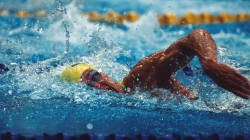
Lesson 1 • Forces in sport and physical activities
Students explore the role of forces in sports and physical activities. They also assess, and utilise, effective ways to communicate these forces using an infographic.

Inquire
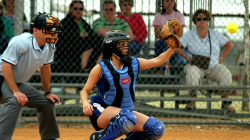
Lesson 2 • Balanced and unbalanced forces
Students explore how balanced and unbalanced forces affect the motion of objects.
Lesson 3 • Does mass affect motion?
Students investigate the effect that changing an object’s mass has on its motion and then consider how these findings can be applied to a sport or physical activity infographic.

Lesson 4 • Does the amount of force affect motion?
Students investigate how changes in the size of the force acting on an object affects its motion, then apply their findings to consider how forces influence motion in their chosen sport or physical activity.
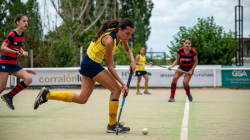
Lesson 5 • Why are surfaces important in sport?
Students investigate how frictional force affects the motion of objects and apply their findings to analyse the design of sporting equipment.
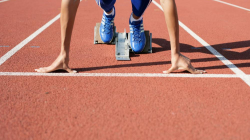
Lesson 6 • Controlling the curve
Students learn that gravitational force acts on balls in flight, changing their motion.

Lesson 6A • How does magnetic force affect motion?
Students learn that magnetic forces can attract or repel objects without contact. They investigate how the strength of magnetic force changes with distance and explore how magnets are used to control motion in sporting contexts.
Act
Lesson 7 • Designing a forces infographic
Students design an infographic to show how forces affect movement in a sport or physical activity for new or improving players.
The Australian Academy of Science supports and encourages broad use of its material. Unless indicated below, copyright material available on this website is licensed under a Creative Commons Attribution-NonCommercial-ShareAlike 4.0 International (CC BY-NC-SA 4.0) licence.
Curriculum and syllabus alignment
Year 7
By the end of Year 7, students represent and explain the effects of forces acting on objects. They identify the factors that can influence development of and lead to changes in scientific knowledge and explain how scientific responses are developed and can impact society. Students explain how scientific responses are developed and can impact society and explain the role of science communication in shaping viewpoints, policies and regulations.
Students plan and conduct safe, reproducible investigations to test relationships and aspects of scientific models. They identify potential ethical issues and intercultural considerations required for field locations or use of secondary data. Students use equipment to generate and record data with precision. They select and construct appropriate representations to organise data and information. Students process data and information and analyse it to describe patterns, trends and relationships. They identify possible sources of error in methods and identify unanswered questions in conclusions and claims. Students identify evidence to support their conclusions and construct arguments to support or dispute claims. They select and use language and text features appropriately for their purpose and audience when communicating their ideas and findings.
Science as a human endeavour
examine how proposed scientific responses to contemporary issues may impact on society and explore ethical, environmental, social and economic considerations
Science understanding
Investigate and represent balanced and unbalanced forces, including gravitational force, acting on objects, and relate changes in an object’s motion to its mass and the magnitude and direction of forces acting on it
Science inquiry
develop investigable questions, reasoned predictions and hypotheses to explore scientific models, identify patterns and test relationships
plan and conduct reproducible investigations to answer questions and test hypotheses, including identifying variables and assumptions and, as appropriate, recognising and managing risks, considering ethical issues and recognising key considerations regarding heritage sites and artefacts on Country/Place
select and use equipment to generate and record data with precision, using digital tools as appropriate
analyse methods, conclusions and claims for assumptions, possible sources of error, conflicting evidence and unanswered questions
construct evidence-based arguments to support conclusions or evaluate claims and consider any ethical issues and cultural protocols associated with using or citing secondary data or information
write and create texts to communicate ideas, findings and arguments for specific purposes and audiences, including selection of appropriate language and text features, using digital tools as appropriate
Australian curriculum content links
| Science understanding core concept: Forces affect the motion and behaviour of objects. |
| Sub-strand | Content descriptor | AC code | Achievement standard | Elaboration/application |
| SHE: Use and influence of science | Examine how proposed scientific responses to contemporary issues may impact on society and explore ethical, environmental, social and economic considerations. | AC9S7H03 | Students explain how scientific responses are developed and can impact society. | Students examine how scientific understanding has led to changes in the materials and equipment used in inclusive sports and Paralympic competitions (Lessons 1-7). |
| SHE: Use and influence of science | Explore the role of science communication in informing individual viewpoints and community policies and regulations. | AC9S7H04 | Students explain the role of science communication in shaping viewpoints, policies and regulations. | Students apply their understanding of forces and the importance of effective communication to design an infographic to help new participants or those wishing to improve their skills. (Lessons 1-7). |
| SHE: Nature and development of science | Explain how new evidence or different perspectives can lead to changes in scientific knowledge. | AC9S7H01 | Students identify the factors that can influence development of and lead to changes in scientific knowledge. | Students explain how new scientific evidence in a variety of sports has led to changes in starting blocks, wheelchair basketball (Lesson 4), and Paralympic sprinter blades (Lesson 5). |
| SHE: Nature and development of science | Investigate how cultural perspectives and world views influence the development of scientific knowledge. | AC9S7H02 | Students explain how scientific responses are developed and can impact society. | Students investigate traditional Aboriginal oral traditions and cultural practices of coming together, sharing, growing, and strengthening relationships through a Yarning circle (Lesson 7). |
| SU: Physical sciences | Investigate and represent balanced and unbalanced forces, including gravitational force, acting on objects, and relate changes in an object’s motion to its mass and the magnitude and direction of forces acting on it. | AC9S7U04 | Students represent and explain the effects of forces acting on objects. | Students determine the effect of forces on motion (Lesson 2). They investigate the impact of changing the mass of an object on its motion and apply their findings to sports and physical activities (Lesson 3 and 4). Students investigate the impact of frictional force on motion (Lesson 5). They experimentally determine that gravitational force acts on balls in flight (Lesson 6). Students observe magnetic braking in sporting equipment (Lesson 6A). |
| SI: Questioning and predicting | Develop investigable questions, reasoned predictions and hypotheses to explore scientific models, identify patterns and test relationships. | AC9S7I01 | Students plan and conduct safe, reproducible investigations to test relationships and aspects of scientific models. | Students develop investigable questions and hypotheses to explore scientific models, such as: How does an increase in force affect the distance an object travels? (Lessons 2, 4, 5, 6). They develop a research question in the Lesson 5 frictional force investigation. |
| SI: Planning and conducting | Plan and conduct reproducible investigations to answer questions and test hypotheses, including identifying variables and assumptions and, as appropriate, recognising and managing risks, considering ethical issues and recognising key considerations regarding heritage sites and artefacts on Country/ Place. | AC9S7I02 | Students plan and conduct safe, reproducible investigations to test relationships and aspects of scientific models. They identify potential ethical issues and intercultural considerations required for field locations or use of secondary data. | Students design reproducible investigations that specifically test variables of the causal relationship and control the remaining variables (Lesson 2-6). Students develop and refine a procedure to collect reliable data in Lesson 6. |
| SI: Planning and conducting | Select and use equipment to generate and record data with precision, using digital tools as appropriate. | AC9S7I03 | Students use equipment to generate and record data with precision. | Students select and use equipment when conducting investigations in Lessons 2-6A to generate and record data. Students use an online simulation to generate and record data in Lessons 2 and 3. |
| SI: Processing, modelling and analysing | Select and construct appropriate representations, including tables, graphs, models, and mathematical relationships, to organise and process data and information. | AC9S7I04 | Students select and construct appropriate representations to organise data and information. | Students draw labelled force arrows (Lessons 2, 5 and 6). Students record observations and/or measurements, in tables and graphs (Lessons 2-6). |
| SI: Processing, modelling and analysing | Analyse data and information to describe patterns, trends and relationships and identify anomalies. | AC9S7I05 | Students process data and information and analyse it to describe patterns, trends and relationships. | Students analyse data in tables and graphs to describe patterns and trends to describe the relationship between variables (Lessons 2-6A). They construct a model to describe the relationship, describe how a scientific model can be used to make predictions, and test their model (Lesson 3). |
| SI: Evaluating | Analyse methods, conclusions and claims for assumptions, possible sources of error, conflicting evidence and unanswered questions. | AC9S7I06 | Students identify possible sources of error in methods and identify unanswered questions in conclusions and claims. | Students analyse data from experiments to write conclusions (Lesson 3-5). They analyse the precision and accuracy of force measurements (Lesson 4) and assess the reliability of the collected data (Lesson 6). Students identify errors that might have led to variation in data and suggest an improvement to minimise the impact (Lesson 4-6). |
| SI: Evaluating | Construct evidence-based arguments to support conclusions or evaluate claims and consider any ethical issues and cultural protocols associated with using or citing secondary data or information. | AC9S7I07 | Students identify evidence to support their conclusions and construct arguments to support or dispute claims. | Students construct arguments based on evidence gathered (Lesson 5). They use argumentation to make a claim using evidence from their investigation findings (Lesson 6A). |
| SI: Communicating | Write and create texts to communicate ideas, findings and arguments for specific purposes and audiences, including selection of appropriate language and text features, using digital tools as appropriate. | AC9S7I08 | Students select and use language and text features appropriately for their purpose and audience when communicating their ideas and findings. | Students write a report on a scientific investigation using appropriate scientific conventions and representations, including a discussion of how assumptions and possible sources of error may have affected the results (Lessons 5 and 6). They produce an infographic using scientific terminology and representations for a Year 7 audience (Lesson 7). |
Teaching notes
- While this teaching sequence covers Australian Curriculum—Physical sciences AC9S7U04, it may not cover all of the requirements for individual states. If required, add additional Inquire phase lessons as appropriate.
- Read through the teaching sequence, including the professional learning.
- Note any adaptations you would like to make to suit your school’s and students’ context.
- Check that your IT department will allow access to YouTube videos and student devices can run the PhET animations.
- Complete the ordering of laboratory equipment and rooms (if required).
Lab tech notes
As required in all states, teachers must prepare their risk assessments of the activities.
Some activities in the lesson sequence require organisation and supervision of outside activities. Identify the direction of ball movement and the force used to ensure students are not at risk of injury during the games.
The materials needed in each lesson in the sequence are summarised below.
Lesson 1
Lesson 1 features students playing a traditional Indigenous game called Koolchee (“kool-chee”), played by the Diyari people from near Lake Eyre in South Australia. This game requires the following equipment:
- Tennis balls or Kanga Cricket balls – one per player
- Cones or markers to mark out the playing area
- 10 Plastic skittles or 1.25 L water/soft drink bottles, weighted by filling partially with water or sand
Lesson 2
In Lesson 2, students complete an activity to investigate balanced and unbalanced forces. Each group requires the following materials:
- Wooden block with a push pin or nail inserted into the middle
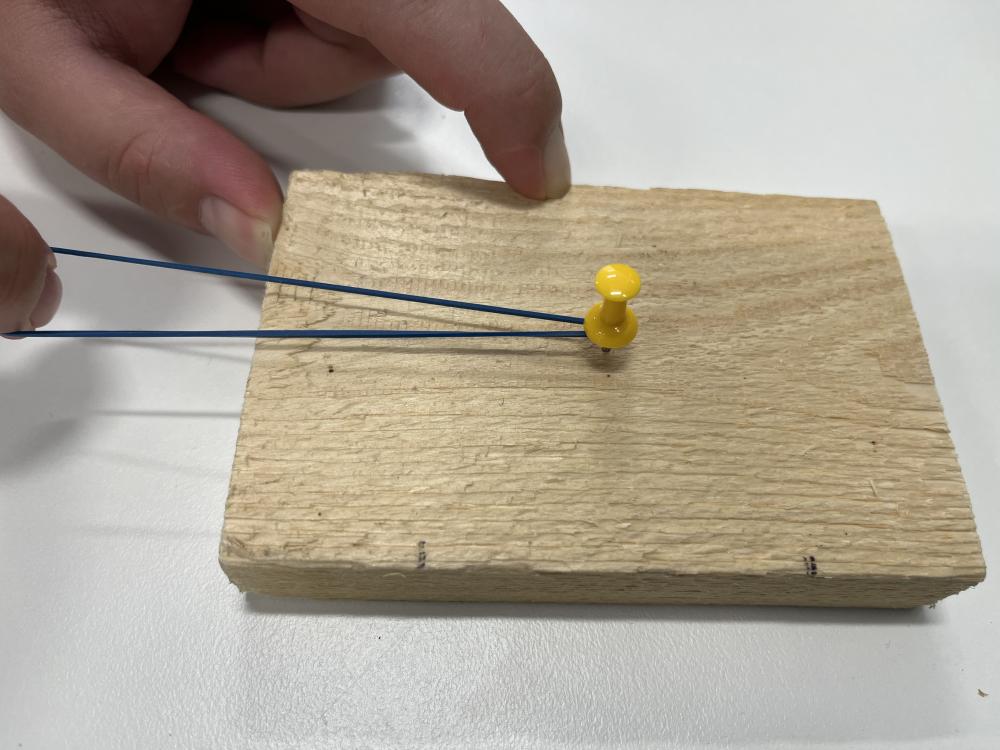
- 2 x identical elastic bands
- Butchers paper
- Marker pens
- Scientific calculator
- 30 cm ruler
Lesson 3
In Lesson 3, teachers have the option, if time allows, to play Woggabiliri (“wog-gab-a-lir-i”), a traditional Indigenous game which has been adapted into a kicking volley game. In keeping with the lesson aim, two different-sized soccer balls (or two soft inflatable balls of different mass) are needed for students to experience playing the games with a lighter and heavier ball.
Lesson 4
In Lesson 4, students investigate how force affects the distance an object travels.
The teacher demonstration of how to measure force using a Newton meter requires the following materials:
- 5 N Newton meter
- 20 N Newton meter
- Length of sewing elastic or three elastic bands tied together
- Lab stool or table legs
Each group requires the following materials:
- 5 N Newton meter
- Length of sewing elastic or three elastic bands tied together
- Lab stool or table legs
- Chalk (or something to mark an erasable line between the chair legs)
- A4 paper
- 1 metre ruler or tape measure
- Wooden block
If time allows students can play a traditional Indigenous game called Gorri (“gor-ri”), played in Central Australia. This game requires the following equipment:
- An area 15-20 metres long and about 20 metres wide
- 10 x marker cones to designate the playing area
- Large ball (soccer ball to exercise ball size)
- 1-2 tennis balls per player
Lesson 5
Lesson 5 features an investigation where students drag a wooden block over different surfaces and measure the force needed to sustain the constant speed of the block on the surface. This experiment can be set up by gluing surfaces such as sandpaper or carpet pieces onto a wooden board, as shown in the images below. Materials such as mulch and oil could be placed on a tray to minimise the clean-up.
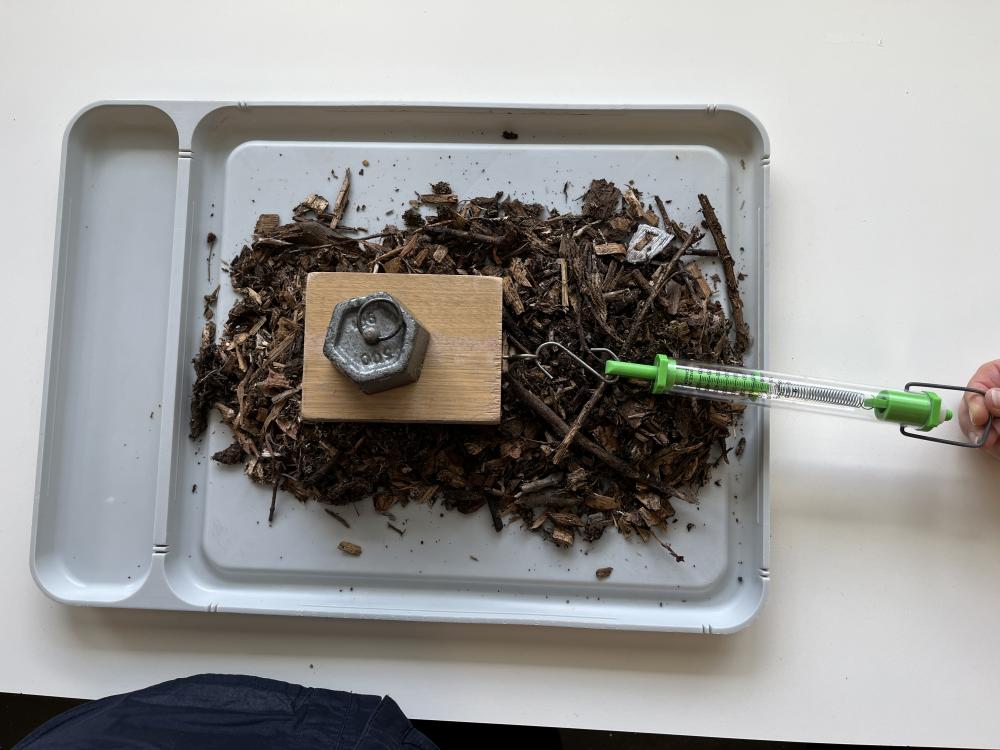
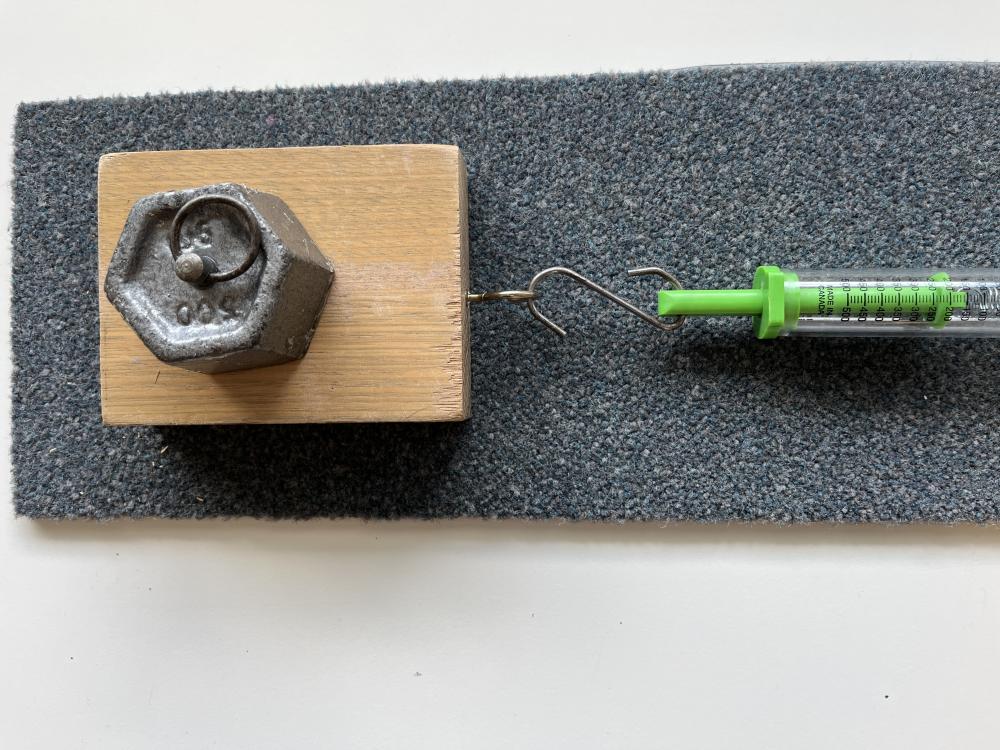
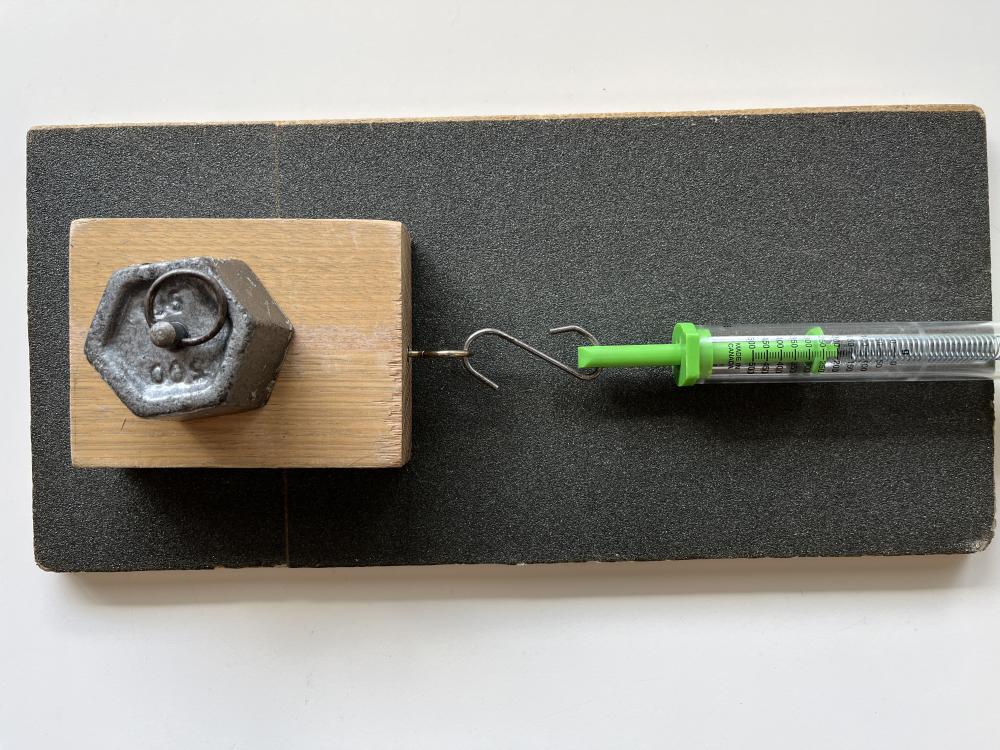
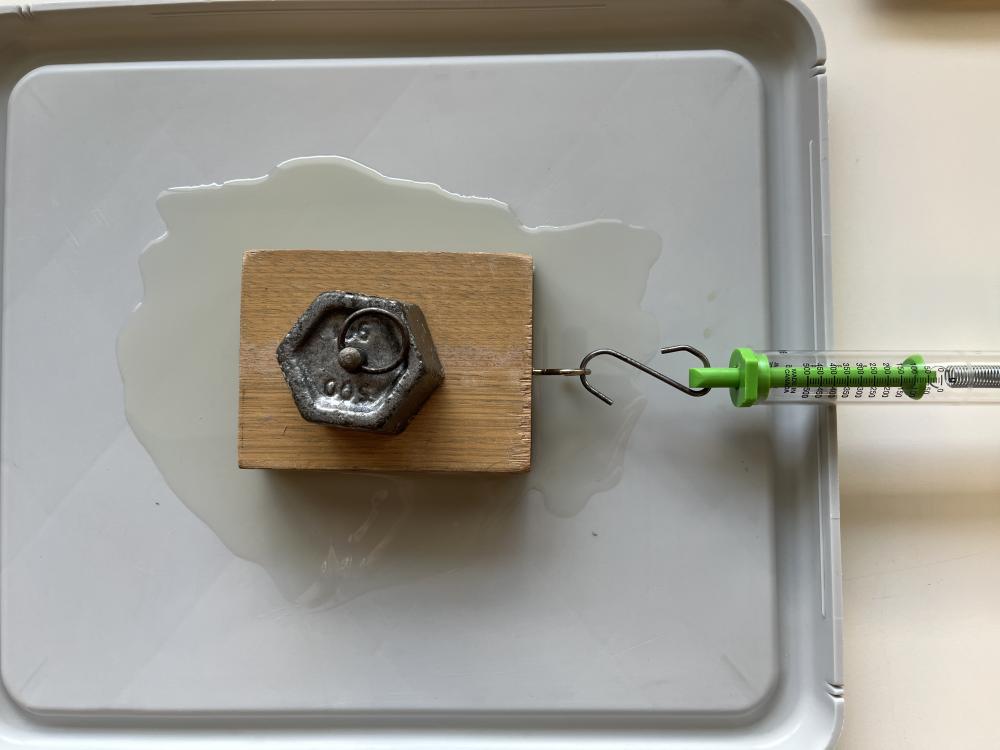
Care will be needed when using mulch, as it may contain pathogens such as Legionella. When handling the mulch, gloves should be worn and dampened prior to use to reduce dust formation. Use in a well-ventilated area to avoid inhalation of dust.
Lesson 6
In Lesson 6, students conduct an investigation to determine the impact of gravitational force on the distance a marble rolling down a ramp travels in a set time. Each group requires the following materials:
- Wooden ramp or a long cardboard tube to use as a ramp
- Books to raise the ramp
- Metre ruler or tape measure
- Marble or ball bearing
- Marker or pencil
- Timer
There is also an optional activity called “Controlling the curve” in which students will need a range of balls such as netballs, basketballs, and footballs to pass and kick.
Teachers may also extend this lesson by playing Parndo (“parn-do”), a traditional Indigenous game played by Aboriginal people in the vicinity of Adelaide, where players kick the ball high into the air and attempt to catch it. The parndo (ball) was about the size of a tennis ball, made with a piece of possum skin sewn together and stuffed with dry grasses and charcoal to give it weight and bounce. The class will need a small soccer ball or similar ball as the parndo to play.
Lesson 6A
In this optional lesson, students conduct an investigation to understand magnetic force. Each group requires the following materials:
- 2 x bar magnets
- 3 x sheets of A4 paper
- Plastic sleeve or cling wrap
- Pencil or texta
- Salt shaker containing iron filings
It will be easier to prevent iron filings from sticking to the magnets if the bar magnets are placed in a plastic sleeve or wrapped in cling film.
The teacher demonstrates how magnetic forces can slow or stop the motion of a magnetic object. Attach a paperclip to a length of thread suspended from a clamp on a retort stand. Position a bar magnet upright on the bench or laboratory surface approximately 1 cm below the paperclip. Gently swing the paperclip so that it passes over the magnet. Observe how the magnetic force slows the paperclip's motion and then causes it to stop above the magnet.
Equipment required:
- Retort stand
- Boss head and clamp
- Thread
- Paperclip
Magnets can lose their magnetism if dropped, so remind students to handle them carefully.
If teachers demonstrate magnetic braking the following equipment could be used:
- Neodymium magnet/s
- Aluminium sheet
- Retort stand
- Boss head and clamp
- Thread
- Steel nut
A simple set-up of the demonstration is shown in this video:
Lesson 7
Before designing an infographic for new participants in a sport or physical activity, students play a new game called Buroinjin (“bur-oin-jin”) – a running-and-passing traditional Indigenous game played by the Kabi Kabi people of south Queensland. This game requires the following equipment:
- A size 2 or 3 soccer ball or touch football
- Something to mark the score lines at opposing ends of a field
Students will need A3 paper if they are completing the infographic on paper.

'Forces and sport' IS ONE OF OUR NEW TEACHING SEQUENCES FOR V9
- On the 'Sequence overview' tab you'll find all the lessons in this sequence and curriculum alignment.
- The 'Our design decisions' tab shows how key scientific ideas develop over the sequence, and shows how the sequence addresses curriculum achievement standards.
- Have you taught this sequence? Use the Feedback button to let us know how it went!