


'Newton meets AI' IS ONE OF OUR NEW TEACHING SEQUENCES FOR V9
- On the 'Sequence overview' tab you'll find all the lessons in this sequence and curriculum alignment.
- The 'Our design decisions' tab shows how key scientific ideas develop over the sequence, and shows how the sequence addresses curriculum achievement standards.
- Have you taught this sequence? Use the Feedback button to let us know how it went!
Launch
Lesson 1 • Accidental physics
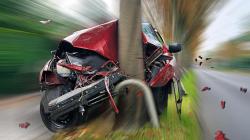
Students use car safety data to determine if it is becoming more dangerous to walk to school. They determine the average speed of cars travelling past their school.

Inquire
Lesson 2 • Fast, faster, fastest
Students explore the relationship between speed, distance, and time by walking at different speeds. They identify that travelling at a faster speed corresponds to walking a longer distance in a unit of time.

Lesson 3 • Think fast
Students measure their reaction time, then calculate the distance that a car will travel during that reaction time.

Lesson 4 • Stopping in time
Students examine data that compares the speed a car travels and the stopping distance of the car. They identify that the faster a car travels, the longer it takes to stop and the further it travels. Students are introduced to the concept of acceleration.

Lesson 5 • Does mass matter?
Students examine Newton’s second law and how it relates to vehicles of different masses. They explore how a car full of people takes longer to stop.

Lesson 6 • Seatbelt safety
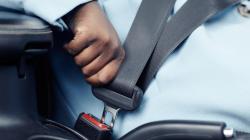
Students examine a variety of examples of Newton’s first law in practice. They then apply this law to the need for seatbelts in all cars that brake rapidly.
Lesson 6A • What can data tell us?
Students use publicly available data to identify the prevalence of pedestrian fatalities at different speeds in their state/territory. They develop an investigable question and use the secondary data to answer that question.

Lesson 6B • Ethical dilemmas
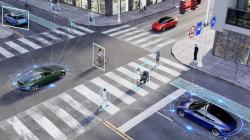
Students use variations on the classic trolley problem to examine the importance of considering ethics when programming autonomous cars.
Act
Lesson 7 • Autonomous car design
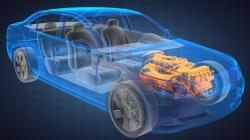
Students consolidate their learning by using their understanding of distance, speed, acceleration, and Newton’s laws to design and communicate the features of a future autonomous car.
The Australian Academy of Science supports and encourages broad use of its material. Unless indicated below, copyright material available on this website is licensed under a Creative Commons Attribution-NonCommercial-ShareAlike 4.0 International (CC BY-NC-SA 4.0) licence.
Curriculum and syllabus alignment
Year 10
By the end of Year 10, students explain how Newton’s laws describe motion and apply the laws to predict motion of objects in a system. Students analyse the importance of publication and peer review in the development of scientific knowledge and analyse the relationship between science, technologies and engineering. They analyse the key factors that influence interactions between science and society.
Students plan and conduct safe, valid and reproducible investigations to test relationships or develop explanatory models. They explain how they have addressed any ethical and intercultural considerations when generating or using primary and secondary data. They select equipment and use it efficiently to generate and record appropriate sample sizes and replicable data with precision. They select and construct effective representations to organise, process and summarise data and information. They analyse and connect a variety of data and information to identify and explain patterns, trends, relationships and anomalies. They evaluate the validity and reproducibility of methods, and the validity of conclusions and claims. They construct logical arguments based on analysis of a variety of evidence to support conclusions and evaluate claims. They select and use content, language and text features effectively to achieve their purpose when communicating their ideas, findings and arguments to diverse audiences.
Science as a human endeavour
Science understanding
Investigate Newton’s laws of motion and quantitatively analyse the relationship between force, mass and acceleration of objects
Science inquiry
Develop investigable questions, reasoned predictions and hypotheses to test relationships and develop explanatory models
Plan and conduct valid, reproducible investigations to answer questions and test hypotheses, including identifying and controlling for possible sources of error and, as appropriate, developing and following risk assessments, considering ethical issues, and addressing key considerations regarding heritage sites and artefacts on Country/Place
Select and use equipment to generate and record data with precision to obtain useful sample sizes and replicable data, using digital tools as appropriate
Select and construct appropriate representations, including tables, graphs, descriptive statistics, models and mathematical relationships, to organise and process data and information
Analyse and connect a variety of data and information to identify and explain patterns, trends, relationships and anomalies
Assess the validity and reproducibility of methods and evaluate the validity of conclusions and claims, including by identifying assumptions, conflicting evidence and areas of uncertainty
Construct arguments based on analysis of a variety of evidence to support conclusions or evaluate claims, and consider any ethical issues and cultural protocols associated with accessing, using or citing secondary data or information
Write and create texts to communicate ideas, findings and arguments effectively for identified purposes and audiences, including selection of appropriate content, language and text features, using digital tools as appropriate
Australian curriculum content links
| Science understanding core concept: Forces affect the motion and behaviour of objects. |
| Sub-strand | Content descriptor | AC code | Achievement standard | Elaboration/application |
| SHE: Use and influence of science | Analyse the key factors that contribute to science knowledge and practices being adopted more broadly by society. | AC9S10H03 | Students analyse the key factors that influence interactions between science and society. | Students analyse the key factors that influence the way cars on the roads interact in a safe manner, and apply their learning to the behaviour required of autonomous cars (Lessons 1-7). |
| SHE: Use and influence of science | Examine how the values and needs of society influence the focus of scientific research. | AC9S10H04 | Students analyse the key factors that influence interactions between science and society. | Students examine how the ethical values of society can influence decisions made about autonomous car programming (Lesson 1, 6A and 6B). |
| SHE: Nature and development of science | Explain how scientific knowledge is validated and refined, including the role of publication and peer review. | AC9S10H01 | Students analyse the importance of publication and peer review in the development of scientific knowledge. | Students consider the reproducibility of testing and the number of data points that are required for results of an experiment to be valid (Lesson 3). |
| SHE: Nature and development of science | Investigate how advances in technologies enable advances in science, and how science has contributed to developments in technologies and engineering. | AC9S10H02 | Students analyse the relationship between science, technology and engineering. | Students examine how an understanding of Newton’s first law led to the development of seat belts in cars (Lesson 6). |
| SU: Physical Sciences | Investigate Newton’s laws of motion and quantitatively analyse the relationship between force, mass and acceleration of objects. | AC9S10U05 | Students explain how Newton’s laws describe motion and apply them to predict motion of objects in a system. | Students analyse and propose relationships between distance and time, speed, force and acceleration (Lessons 3-4). They investigate Newton’s second law in relation to the need to change programming in autonomous cars when there are many passengers (Lesson 5) and investigate Newton’s first law in relation to the need for seatbelts in cars that break abruptly (Lesson 6). |
| SI: Questioning and predicting | Develop investigable questions, reasoned predictions and hypotheses to test relationships and develop explanatory models. | AC9S10I01 | - | Students develop a hypothesis to test reaction times, stopping distances, and Newton’s first law (Lessons 3-6). |
| SI: Planning and conducting | Plan and conduct valid, reproducible investigations to answer questions and test hypotheses, including identifying and controlling for possible sources of error and, as appropriate, developing and following risk assessments, considering ethical issues, and addressing key considerations regarding heritage sites and artefacts on Country/Place. | AC9S10I02 | Students plan and conduct safe, valid and reproducible investigations to test relationships or develop explanatory models. They explain how they have addressed any ethical and intercultural considerations when generating or using primary and secondary data. | Students use a driving model to plan and conduct an experiment on the factors that affect the stopping distance of a car (Lesson 4). |
| SI: Planning and conducting | Select and use equipment to generate and record data with precision to obtain useful sample sizes and replicable data, using digital tools as appropriate. | AC9S10I03 | Students select equipment and use it efficiently to generate and record appropriate sample sizes and replicable data with precision. | Students select and use equipment to generate and record data on reaction time (Lesson 3). They use digital tools to obtain and ‘clean’ secondary data of a useful sample size (Lesson 6A). |
| SI: Processing, modelling and analysing | Select and construct appropriate representations, including tables, graphs, descriptive statistics, models and mathematical relationships, to organise and process data and information. | AC9S10I04 | Students select and construct effective representations to organise, process and summarise data and information. | Students draw tables and graphs to represent an experiment on the factors that affect the stopping distance of a car (Lesson 2-4). |
| SI: Processing, modelling and analysing | Analyse and connect a variety of data and information to identify and explain patterns, trends, relationships and anomalies. | AC9S10I05 | Students analyse and connect a variety of data and information to identify and explain patterns, trends, relationships and anomalies. | Students process and analyse data from experiments on factors that affect the stopping distance of a car (Lessons 3-4). They analyse and connect a variety of activities to identify Newton’s second law (Lesson 4) and analyse a series of videos to explain patterns of Newton’s first law (Lesson 6). Students use secondary data to identify questions and identify patterns, trends and relationships of road traffic fatalities (Lesson 6A). |
| SI: Evaluating | Assess the validity and reproducibility of methods and evaluate the validity of conclusions and claims, including by identifying assumptions, conflicting evidence and areas of uncertainty. | AC9S10I06 | Students evaluate the validity and reproducibility of methods, and the validity of conclusions and claims. | Students evaluate data from experiments and Newton’s second law of motion activities on the factors that affect the stopping distance of a car (Lessons 2-6). |
| SI: Evaluating | Construct arguments based on analysis of a variety of evidence to support conclusions or evaluate claims, and consider any ethical issues and cultural protocols associated with accessing, using or citing secondary data or information. | AC9S10I07 | Students construct logical arguments based on analysis of a variety of evidence to support conclusions and evaluate claims. | Students construct arguments based on evidence gathered from experiments on factors that affect the stopping distance of a car (Lessons 1-7) and ethical issues and decisions programmed into autonomous cars (Lesson 6B). |
| SI: Communicating | Write and create texts to communicate ideas, findings and arguments effectively for identified purposes and audiences, including selection of appropriate content, language and text features, using digital tools as appropriate. | AC9S10I08 | Students select and use content, language and text features effectively to achieve their purpose when communicating their ideas, findings and arguments to diverse audiences. | Students write a report on an experiment on the factors that affect the stopping distance of a car (Lesson 4) and produce a poster or advertisement that outlines the features of an autonomous car (Lesson 7). |
Teaching notes
- While this teaching sequence covers many of the requirements of the Australian Curriculum—Physical sciences, it may not cover all of the requirements for individual states. If required, add additional Inquire phase lessons as appropriate.
- Read through the teaching sequence.
- Note any adaptations you would like to make to suit your school’s and students’ context.
- Check that your IT department will allow access to YouTube or other videos.
- Complete the ordering of laboratory equipment and rooms (if required).
- Some students may have experienced trauma as a result of a traffic accident. Please consult with the students prior to starting this teaching sequence.
Lab tech notes
As required in all states, teachers must prepare their risk assessments of the activities. Some of the risks that need to be considered are listed below.
Lesson 1
Identify an appropriate location for students to measure the speed of cars travelling along a road close to the school. Consider how students can stay safe on a footpath as cars move past. Also consider the safety of the drivers by minimising distractions.
Lesson 3
Remind students how to handle 1 m rulers safely, especially when holding them at head height. 30 cm rulers could be used, however, these may not be long enough during the ‘distraction’ phase of the experiment.
Lesson 5
Activity 1: A long board is preferable (>70 cm in length). Advise students to be aware of the nails when moving the board. Toy cars should be able to roll in a straight line along the ramp. Advise students to be careful when using the elastic.
Activity 2: Test the tape measure for sharp edges to ensure students will not cut their fingers as it retracts.

'Newton meets AI' IS ONE OF OUR NEW TEACHING SEQUENCES FOR V9
- On the 'Sequence overview' tab you'll find all the lessons in this sequence and curriculum alignment.
- The 'Our design decisions' tab shows how key scientific ideas develop over the sequence, and shows how the sequence addresses curriculum achievement standards.
- Have you taught this sequence? Use the Feedback button to let us know how it went!