

'Tectonic collision course' IS ONE OF OUR NEW TEACHING SEQUENCES FOR V9
- On the 'Sequence overview' tab you'll find all the lessons in this sequence and curriculum alignment.
- The 'Our design decisions' tab shows how key scientific ideas develop over the sequence, and shows how the sequence addresses curriculum achievement standards.
- Have you taught this sequence? Use the Feedback button to let us know how it went!
Launch
Lesson 1 • Quake detectives
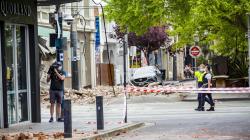
Students use an empathy map to explore people’s experiences of earthquakes and map the frequency of earthquakes around the Ring of Fire. They then compare this to the limited number of earthquakes experienced in Australia.

Inquire
Lesson 2 • Quakes and plates
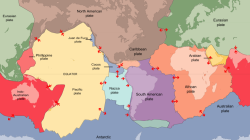
Students investigate the evidence that supports the linking of land masses to form Gondwana. They examine the development of the theory of plate tectonics and how scientists’ ideas may change as new evidence becomes available.
Lesson 3 • Forces beneath our feet
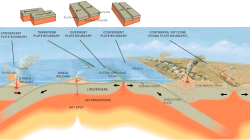
Students model how convection, slab pull, and ridge push cause the movement of tectonic plates. They examine the types of boundaries and how different models (graphs or 3D) can be used for different purposes.
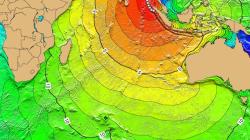
Lesson 4 • Tsunamis
Students use a tsunami model to hypothesise and test the impact of tsunami waves during high tide and low tide. They compare the physical model to a mathematical model that generates a graph which allows the measurement of the change in tidal height at low tide and high tide.
Lesson 5 • Shake, rattle, and roll
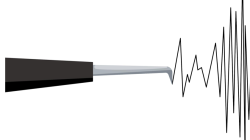
Students develop a model earthquake machine that can mimic P and S waves in earthquakes, then use these waves to determine the epicentre of an earthquake.
Lesson 6 • Earthquake materials
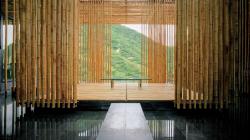
Students design and test a variety of building materials for flexibility and strength to determine their suitability for building in an earthquake zone.
Act
Lesson 7 • Designing for earthquakes
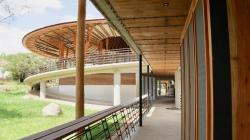
Students provide evidence of their learning by identifying the geological features of an area affected by earthquakes and designing a building that would be able to resist the effects of an earthquake or tsunami.
The Australian Academy of Science supports and encourages broad use of its material. Unless indicated below, copyright material available on this website is licensed under a Creative Commons Attribution-NonCommercial-ShareAlike 4.0 International (CC BY-NC-SA 4.0) licence.
Curriculum and syllabus alignment
Year 8
By the end of Year 8, students apply an understanding of the theory of plate tectonics to explain patterns of change in the geosphere. They analyse how different factors influence the development of and lead to changes in scientific knowledge. Students analyse the key considerations that inform scientific responses and how these responses impact society. They analyse the importance of science communication in shaping viewpoints, policies, and regulations.
Students plan and conduct safe, reproducible investigations to test relationships and explore models. They describe potential ethical issues and intercultural considerations needed for specific field locations or the use of secondary data. They select and use equipment to generate and record data with precision. They select and construct appropriate representations to organise and process data and information. They analyse data and information to describe patterns, trends and relationships and identify anomalies. They identify assumptions and sources of error in methods and analyse conclusions and claims with reference to conflicting evidence and unanswered questions. They construct evidence-based arguments to support conclusions and evaluate claims. They select and use language and text features appropriately for their purpose when communicating their ideas, findings and arguments to specific audiences.
Science as a human endeavour
Science understanding
Investigate tectonic activity including the formation of geological features at divergent, convergent and transform plate boundaries and describe the scientific evidence for the theory of plate tectonics
Science inquiry
Develop investigable questions, reasoned predictions and hypotheses to explore scientific models, identify patterns and test relationships
Plan and conduct reproducible investigations to answer questions and test hypotheses, including identifying variables and assumptions and, as appropriate, recognising and managing risks, considering ethical issues and recognising key considerations regarding heritage sites and artefacts on Country/Place
Select and use equipment to generate and record data with precision, using digital tools as appropriate
Analyse methods, conclusions and claims for assumptions, possible sources of error, conflicting evidence and unanswered questions
Construct evidence-based arguments to support conclusions or evaluate claims and consider any ethical issues and cultural protocols associated with using or citing secondary data or information
Write and create texts to communicate ideas, findings and arguments for specific purposes and audiences, including selection of appropriate language and text features, using digital tools as appropriate
Australian curriculum content links
| Science understanding core concept: The Earth system comprises dynamic and interdependent systems. Interactions between these systems cause continuous change over a range of scales. All living things are connected through Earth’s systems and depend on sustainability of the Earth system. |
| Sub-strand | Content descriptor | AC code | Achievement standard | Elaboration/application |
| SHE: Use and influence of science | Examine how proposed scientific responses to contemporary issues may impact on society and explore ethical, environmental, social and economic considerations. | AC9S8H03 | Students analyse the importance of science communication in shaping viewpoints, policies and regulations. | Students investigate how scientific responses including new building materials, improved predictions and early warning systems have supported communities living in a country in the Asia-Pacific regional near plate boundaries, for example, Japan, Indonesia or New Zealand (Lesson 3 and 7). |
| SHE: Use and influence of science | Explore the role of science communication in informing individual viewpoints and community policies and regulations. | AC9S8H04 | Students analyse the importance of science communication in shaping viewpoints, policies and regulations. | Students explore how seismic data is collected and shared between governments across the Asia-Pacific region and how governments use this data, including for tsunami alerts (Lesson 1). |
| SHE: Nature and development of science | Explain how new evidence or different perspectives can lead to changes in scientific knowledge. | AC9S8H01 | Students analyse how different factors influence development of and lead to changes in scientific knowledge. | Students examine the evidence that led to the acceptance of the theory of plate tectonics over the idea of continental drift (Lesson 2). |
| SHE: Nature and development of science | Investigate how cultural perspectives and world views influence the development of scientific knowledge. | AC9S8H02 | Students analyse the key considerations that inform scientific responses and how these responses impact society. | Students investigate the usefulness of bamboo as a building material in earthquake zones (Lesson 6). |
| SU: Earth and space sciences | Investigate tectonic activity including the formation of geological features at divergent, convergent and transform plate boundaries and describe the scientific evidence for the theory of plate tectonics. | AC9S8U03 | Students apply an understanding of the theory of plate tectonics to explain patterns of change in the geosphere. | Students examine patterns of earthquake and volcanic activity over times and proposing explanations and evaluating the impact of tectonic events on human populations (Lesson 1 and 5). They model interactions at plate boundaries and investigate the forces involved in tectonic plate movement including slab pull, ridge push and convection (Lessons 3 and 5). They construct a timeline of evidence that shows the development of the theory of plate tectonics (Lesson 2). They then examine engineering solutions to reduce the impact of tsunamis and earthquakes (Lesson 7) |
| SI: Questioning and predicting | Develop investigable questions, reasoned predictions and hypotheses to explore scientific models, identify patterns and test relationships. | AC9S8I01 | Students develop investigable questions to explore scientific models, such as: How do the shapes of the continents support the theory of plate tectonics? (Lessons 2, 3, 4) | |
| SI: Planning and conducting | Plan and conduct reproducible investigations to answer questions and test hypotheses, including identifying variables and assumptions and, as appropriate, recognising and managing risks, considering ethical issues and recognising key considerations regarding heritage sites and artefacts on Country/Place. | AC9S8I02 | Students plan and conduct safe, reproducible investigations to test relationships and explore models. They describe potential ethical issues and intercultural considerations needed for specific field locations or use of secondary data. | Students design reproducible investigations that specifically test variables of the causal relationship and control the remaining variables (Lesson 5). They identify assumptions related to testing a hypothesis using three analogous models to model the effects of an earthquake or tsunami on buildings (Lesson 5 and 6). |
| SI: Planning and conducting | Select and use equipment to generate and record data with precision, using digital tools as appropriate. | AC9S8I03 | Students select and use equipment to generate and record data with precision. | Students use appropriate positive and negative signs for standard units, number of decimal points and exponential notation where relevant when recording data (Lesson 4). |
| SI: Processing, modelling and analysing | Select and construct appropriate representations, including tables, graphs, models and mathematical relationships, to organise and process data and information. | AC9S8I04 | Students select and construct appropriate representations to organise and process data and information. | Students use visual displays of large data sets, such as maps showing the location of volcanoes and earthquakes, to identify temporal and spatial relationships (Lessons 2-4). They examine the strengths and limitations of representations such as physical models, diagrams and virtual simulations and selecting the most appropriate representation to use (Lessons 3 and 4). |
| SI: Processing, modelling and analysing | Analyse data and information to describe patterns, trends and relationships and identify anomalies. | AC9S8I05 | Students analyse data and information to describe patterns, trends and relationships and identify anomalies. | Students compare correlational relationships in data and analyse this relationship for causality (Lesson 2 and 5). They use spreadsheets to analyse secondhand data and explain anomalies (Lesson 4). |
| SI: Evaluating | Analyse methods, conclusions and claims for assumptions, possible sources of error, conflicting evidence and unanswered questions. | AC9S8I06 | Students identify assumptions and sources of error in methods and analyse conclusions and claims with reference to conflicting evidence and unanswered questions. | Students compare results with other groups or secondary sources to examine consistency and describing where there may be conflicting results or conclusions (Lesson 2 and 4). They analyse conclusions or claims to determine if there are further questions which should be explored to verify the conclusion or claim (Lessons 1-6). |
| SI: Evaluating | Construct evidence-based arguments to support conclusions or evaluate claims and consider any ethical issues and cultural protocols associated with using or citing secondary data or information. | AC9S8I07 | Students construct evidence-based arguments to support conclusions and evaluate claims. | Students evaluate the quality of evidence of primary and secondary sources used when constructing an argument to support a conclusion or claim (Lesson 3). They examine competing ideas and differences in methods when constructing an argument (Lesson 2). Students analyse what evidence would be necessary to support the conclusion that all buildings in an earthquake area should be made of bamboo (Lesson 5). |
| SI: Communicating | Write and create texts to communicate ideas, findings and arguments for specific purposes and audiences, including selection of appropriate language and text features, using digital tools as appropriate | AC9S8I08 | Students select and use language and text features appropriately for their purpose when communicating their ideas, findings and arguments to specific audiences. | Students write a report on a scientific investigation using appropriate scientific conventions and representations including a discussion of how assumptions and possible sources of error may have affected the results (Lesson 5). |
Teaching notes
- While this teaching sequence covers many of the requirements of the Australian Curriculum—Earth and space sciences, it may not cover all of the requirements for individual states. If required, add additional Inquire phase lessons as appropriate.
- Read through the teaching sequence.
- Note any adaptations you would like to make to suit your school’s and students’ context.
- Check that your IT department will allow access to YouTube or other videos.
- Complete the ordering of laboratory equipment and rooms (if required).
Lab tech notes
As required in all states, teachers must prepare their risk assessments of the activities. Some of the risks that need to be considered are listed below.
Lesson 3
Lesson 3 features a class demonstration of the convection of the Earth’s layers using a layer of Milo on top of milk. This activity requires the following equipment:
- hot plate
- saucepan
- milk
- Milo powder (this produces a thick layer on the surface of the milk, better than other powdered products)
- spoon
While there are alternative ways to demonstrate convection, this activity uses Milo and milk to demonstrate the generation of cracks and hot spots. Milo has more hydrophobic properties than other commercially available powders and therefore stays on the surface of the milk.
A demonstration using a large saucepan on a slowly heating hotplate illustrates the whole process of tectonic plate movement, from the development of cracks and hotspots to divergence and convergence (including subduction). If possible, bring the milk to room temperature before the demonstration, as it makes the process faster.
NOTE: No eating or drinking in science labs.
Lesson 4
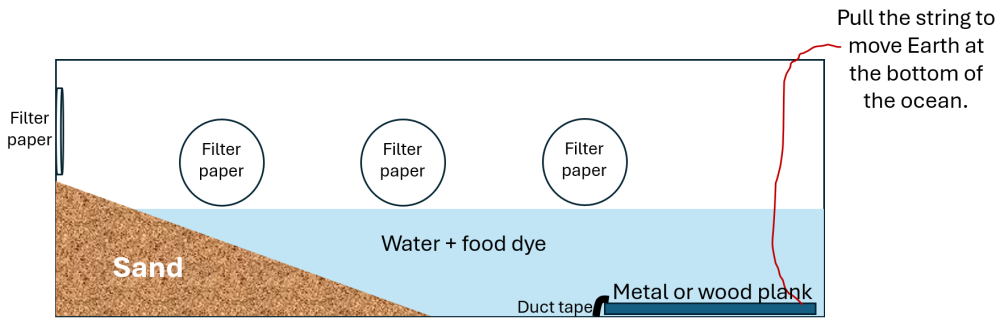
Prior to teaching Lesson 4, you will need to prepare a tsunami tank, using an old fish tank or equivalent. This will require the following equipment:
- large clear container or fish tank
- sand or soil to model the beach zone
- metal or wooden plank, the same width as the tank
- string connected to one end of the plank
- duct tape
- water to fill the tank halfway
- cloth to dry the sides of the tank
- 8 x filter paper
- sticky tape
- permanent markers
- Optional: food dye
To create the tsunami tank, follow the below instructions.
- Add the sand/soil at one end of the tank at an angle so that it looks like a sloping beach.
- Place the large wooden or metal plank at the opposite end of the beach.
- Use duct tape to fix the beach end of the plank to the bottom of the fish tank.
- Fix the end of the string securely to the other end of the plank.
- Gently start filling the tank with water Add useruntil half the sand ‘beach’ remains above the water.
- Optional: Add food dye to the water so that the marks on the filter paper are clear when the tsunami wave moves.
Lesson 5
In Lesson 5, students will construct and explore three models of earthquakes. The equipment for each of these models should be set up around the classroom.
Liquefaction model
- Medium plastic tub
- Clean beach/playground sand (enough to ¾ fill the tub)
- Water (enough to make all the sand damp without pooling at the top surface)
- Large spoon
- Ping pong ball
- Heavier objects (toy metal car, solid house, or a filled jar of water)
- Plastic toy animal
Remind students to keep the sand inside the tub and to avoid touching their eyes with sandy hands. Students may need paper towel to dry their hands from the sandy water after the activity to avoid clogging the sinks with sand.
Seismic wave model
- Large plastic tub
- 4 occy straps (to fit snuggly across the width of the plastic tub)
- Flexible surface to place on top of occy straps i.e., artificial grass mat
- Objects to place on the flexible surface (toy car, house, or person)
- Optional: a vibrometer app or micro:bit that shows movement in 3D
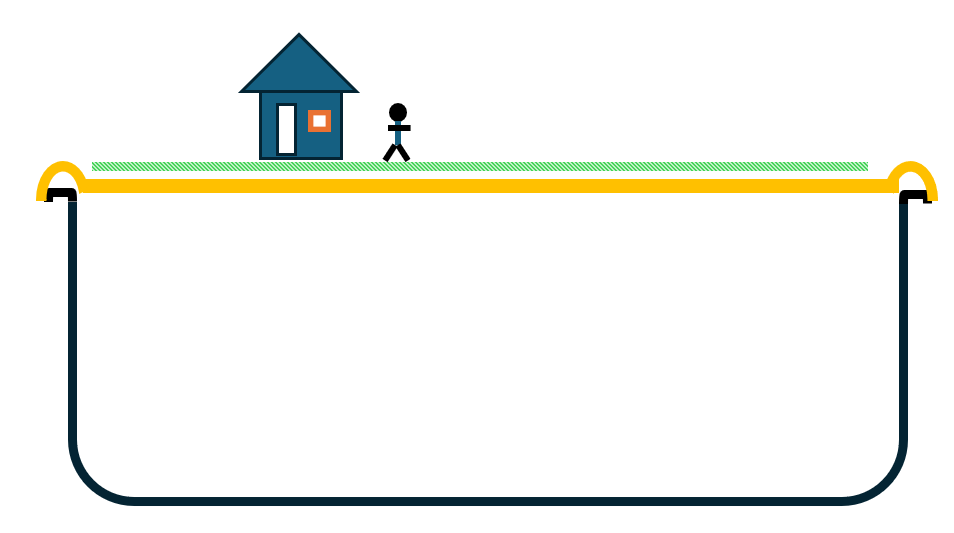
Remind students to avoid suddenly releasing the occy straps to avoid ‘snap’ injuries.
Locating the epicentre
- Ruler
- Pencil
- Compass drawing tool
Each group will also need a large long spring (a slinky). When using the large springs, remind students to treat them carefully to avoid accidents or tangling. Gently stretch the springs across an empty table or floor to avoid collisions or breakages.
Lesson 6
In Lesson 6, students design and test a variety of building materials for flexibility and strength to determine their suitability for building in an earthquake zone. Each group will require:
- 1 x bamboo stake
- 1 x wooden dowel
- 1 x metal stake
- bucket
- water or weights to place in the bucket
- scales or a Newton meter to measure the mass of the water
- metre ruler (to measure the bend on the testing materials)
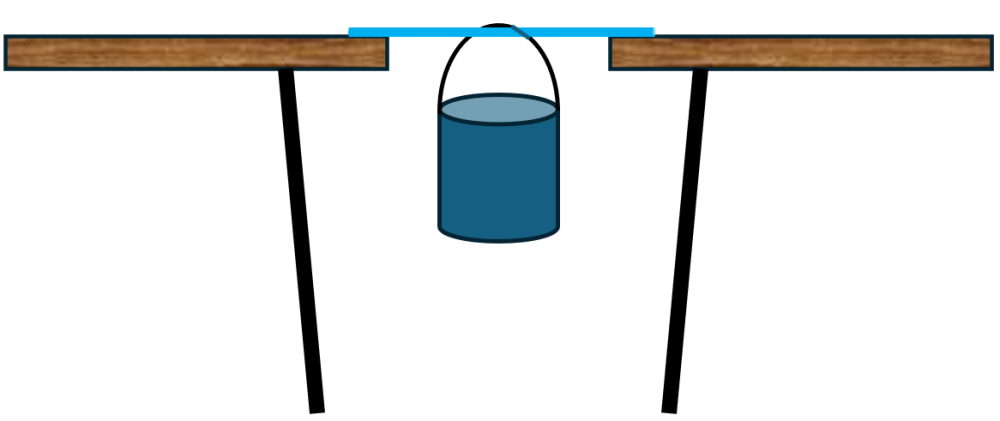
Complete this activity outside if the water is being used as a weight. Remind students to avoid putting their toes under the bucket during testing to avoid injuries. Remind students to add the water or weights slowly to avoid sudden breakages or contact with the rods as they break.
Lesson 7
It may be useful in Lesson 7 to give students access to the liquefaction model and seismic wave model from Lesson 5.
If students will be building prototypes of their design, you may need a selection of building material including bamboo, sticky tape, strong wooden dowel, cardboard, and miniature figures. Remind students how to safely measure and use scissors, Stanley knives, etc., when changing the length of the bamboo or dowel.

'Tectonic collision course' IS ONE OF OUR NEW TEACHING SEQUENCES FOR V9
- On the 'Sequence overview' tab you'll find all the lessons in this sequence and curriculum alignment.
- The 'Our design decisions' tab shows how key scientific ideas develop over the sequence, and shows how the sequence addresses curriculum achievement standards.
- Have you taught this sequence? Use the Feedback button to let us know how it went!