

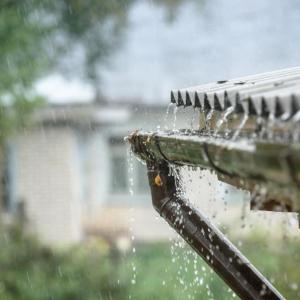
'Water mixture rescue' IS ONE OF OUR NEW TEACHING SEQUENCES FOR V9
- On the 'Sequence overview' tab you'll find all the lessons in this sequence and curriculum alignment.
- The 'Our design decisions' tab shows how key scientific ideas develop over the sequence, and shows how the sequence addresses curriculum achievement standards.
- Have you taught this sequence? Use the Feedback button to let us know how it went!
Launch
Lesson 1 • The importance of water
Students examine how clean water is important for everyday life and identify some of the materials that might contaminate the water we drink.

Inquire
Lesson 2 • Rainwater mixtures
Students examine the different substances in the mixture of rainwater collected from a roof. They identify the properties of each substance in the mixture and use magnets to separate the iron filings.
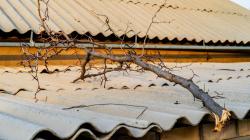
Lesson 3 • Size matters
Students examine how particle size can be used as a physical property to separate components of a rainwater mixture. They plan an experiment to determine the effectiveness of filters with different pore sizes in removing debris from water.
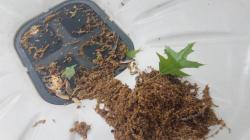
Lesson 4 • Density, dirt and sludge
Students explore the property of density and how it can be used to separate different components in a mixture of rainwater. They make observations of the rainwater mixture before and after it has been sitting for 30 minutes.
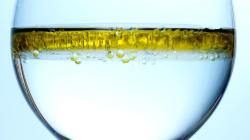
Lesson 5 • Drinkable water
Students use crystallisation to determine the amount of dissolved solids in their rainwater sample, then compare the sample to the Australian drinking water guidelines to determine its palatability.
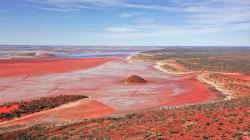
Lesson 6 • Testing for PFAS
Students use paper chromatography to separate ink and identify the most soluble substances based on how far they travel. They analyse their results, identify anomalies, and suggest ways to improve reliability.
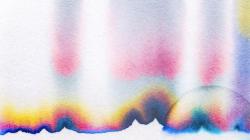
Act
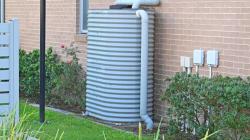
Lesson 7 • Designing for sustainability
Students consolidate their learning by identifying the substances present in rainwater and listing the properties that can be used to separate them. They will design a water tank system that can make the water more useful to the household.
The Australian Academy of Science supports and encourages broad use of its material. Unless indicated below, copyright material available on this website is licensed under a Creative Commons Attribution-NonCommercial-ShareAlike 4.0 International (CC BY-NC-SA 4.0) licence.
Curriculum and syllabus alignment
Year 7
By the end of Year 7, students use particle theory to explain the physical properties of substances and develop processes that separate mixtures. Students identify the factors that can influence development of and lead to changes in scientific knowledge. They explain how scientific responses are developed and can impact society. They explain the role of science communication in shaping viewpoints, policies and regulations.
Students plan and conduct safe, reproducible investigations to test relationships and aspects of scientific models. They identify potential ethical issues and intercultural considerations required for field locations or use of secondary data. They use equipment to generate and record data with precision. They select and construct appropriate representations to organise data and information. They process data and information and analyse it to describe patterns, trends and relationships. They identify possible sources of error in methods and identify unanswered questions in conclusions and claims. They identify evidence to support their conclusions and construct arguments to support or dispute claims. They select and use language and text features appropriately for their purpose and audience when communicating their ideas and findings.
Science understanding
Use a particle model to describe differences between pure substances and mixtures and apply understanding of properties of substances to separate mixtures
Science as a human endeavour
Science inquiry
develop investigable questions, reasoned predictions and hypotheses to explore scientific models, identify patterns and test relationships
plan and conduct reproducible investigations to answer questions and test hypotheses, including identifying variables and assumptions and, as appropriate, recognising and managing risks, considering ethical issues and recognising key considerations regarding heritage sites and artefacts on Country/Place
select and use equipment to generate and record data with precision, using digital tools as appropriate
analyse methods, conclusions and claims for assumptions, possible sources of error, conflicting evidence and unanswered questions
construct evidence-based arguments to support conclusions or evaluate claims and consider any ethical issues and cultural protocols associated with using or citing secondary data or information
write and create texts to communicate ideas, findings and arguments for specific purposes and audiences, including selection of appropriate language and text features, using digital tools as appropriate
Australian curriculum content links
| Science understanding core concept: The chemical and physical properties are determined by their structure at a range of scales. |
| Sub-strand | Content descriptor | AC code | Achievement standard | Elaboration/application |
| SHE: Nature and development of science | Explain how new evidence or different perspectives can lead to changes in scientific knowledge. | AC9S7H01 | Students identify the factors that can influence development of and lead to changes in scientific knowledge. | Students re-examine data and evidence as new information about water contaminants becomes available (Lesson 6). |
| SHE: Nature and development of science | Investigate how cultural perspectives and world views influence the development of scientific knowledge. | AC9S7H02 | Students identify the factors that can influence development of and lead to changes in scientific knowledge. | Students investigate how First Nations Australians developed cultural protocols for water management (Lesson 3). |
| SHE: Use and influence of science | Examine how proposed scientific responses to contemporary issues may impact on society and explore ethical, environmental, social and economic considerations. | AC9S7H03 | Students explain how scientific responses are developed and can impact society. | Students examine how the understanding of the accumulation of forever chemicals has led to the regular testing of PFAS chemicals in the environment (Lesson 6). |
| SHE: Use and influence of science | Explore the role of science communication in informing individual viewpoints and community policies and regulations. | AC9S7H04 | Students explain the role of science communication in shaping viewpoints, policies and regulations. | Students investigate how science communication of the impact of waste materials on the environment has led to the adoption of rainwater tanks and filters (Lesson 7). |
| SU: Chemical sciences | Use a particle model to describe differences between pure substances and mixtures and apply understanding of properties of substances to separate mixtures. | AC9S7U06 | Students use particle theory to explain the physical properties of substances and develop processes that separate mixtures. | Students use particle representations to show the difference between pure substances and mixtures, and identify examples of each (Lessons 1 and 4). Students examine different solutions and identify the solvent and solute (Lesson 6). Students investigate and apply a range of physical separation techniques used in everyday contexts, including filtration, decantation, evaporation, crystallisation, chromatography, and distillation (Lessons 1-7). Students analyse how the physical properties of substances in mixtures, such as particle size, density, and volatility, determine the separation technique used (Lesson 1-7). Students investigate separation techniques used by First Nations Australians, including filtering (Lesson 3). |
| SI: Questioning and predicting | Develop investigable questions, reasoned predictions and hypotheses to explore scientific models, identify patterns and test relationships. | AC9S7I01 | Students plan and conduct safe, reproducible investigations to test relationships and aspects of scientific models. | Students discuss the relationship between a reasoned prediction and a hypothesis, identify essential elements of a hypothesis and use a provided scaffold to develop their own hypothesis (Lesson 1 and Lesson 4). |
| SI: Planning and conducting | Plan and conduct reproducible investigations to answer questions and test hypotheses, including identifying variables and assumptions and, as appropriate, recognising and managing risks, considering ethical issues and recognising key considerations regarding heritage sites and artefacts on Country/Place. | AC9S7I02 | Students plan and conduct safe, reproducible investigations to test relationships and aspects of scientific models. They identify potential ethical issues and intercultural considerations required for field locations or use of secondary data. | Students compare the method with the hypothesis and examine the reasonableness of the method for testing that hypothesis (Lesson 3). Students discuss why it is important to identify variables and assumptions when planning an investigation (Lesson 3). Students examine the features of reproducible investigations, construct methods and review other students’ methods (Lesson 5 and Lesson 6). Students identify assumptions relating to variables that are assumed to be constant, such as ambient temperature, properties of materials used or purity of substances (Lesson 3). Students identify risks to themselves and others in investigations and consider actions that can be taken to avoid or manage those risks (Lesson 3). |
| SI: Planning and conducting | Select and use equipment to generate and record data with precision, using digital tools as appropriate. | AC9S7I03 | Students use equipment to generate and record data with precision. | Students select and use equipment appropriate to the investigation (Lesson 5). They examine how the use of digital tools such as stopwatches and digital scales can enable the generation of more precise data (Lesson 5). Students use appropriate standard units and perform simple unit conversions when recording data (Lesson 5). |
| SI: Processing, modelling and analysing | Select and construct appropriate representations, including tables, graphs, models and mathematical relationships, to organise and process data and information. | AC9S7I04 | Students select and construct appropriate representations to organise data and information. | Students use spreadsheets to aid the presentation and analysis of data (Lesson 6). |
| SI: Processing, modelling and analysing | Analyse data and information to describe patterns, trends and relationships and identify anomalies. | AC9S7I05 | They process data and information and analyse it to describe patterns, trends and relationships. | Students identify anomalies in data and investigate their effect on observed patterns or relationships (Lesson 5). |
| SI: Evaluating | Analyse methods, conclusions and claims for assumptions, possible sources of error, conflicting evidence and unanswered questions. | AC9S7I06 | Students identify possible sources of error in methods and identify unanswered questions in conclusions and claims. | Students evaluate the method used in an investigation, identify assumptions made about variables that should be controlled, suggest ways it could be improved and give reasons for the suggested changes (Lesson 3 and Lesson 5). Students consider the spread of repeated measurements and observations (Lesson 5). Students identify possible sources of error in the method used and describe how the method could be improved to remove these sources of error (Lesson 3 and Lesson 5). Students identify the evidence being cited to support a claim and evaluate conflicting evidence (Lesson 3-6). |
| SI: Evaluating | Construct evidence-based arguments to support conclusions or evaluate claims and consider any ethical issues and cultural protocols associated with using or citing secondary data or information. | AC9S7I07 | Students identify evidence to support their conclusions and construct arguments to support or dispute claims. | Students construct an argument supported by evidence and reasoning to support or reject a hypothesis (Lesson 3-6). Students explore how to determine credibility of a source (Lesson 6). |
| SI: Communicating | Write and create texts to communicate ideas, findings and arguments for specific purposes and audiences, including a selection of appropriate language and text features, using digital tools as appropriate. | AC9S7I08 | Students select and use language and text features appropriately for their purpose and audience when communicating their ideas and findings. | Students examine a range of scientific texts, infer the purpose of the text and target audience, and identify specific language and text features that support that inference (Lesson 7). Students report on a scientific investigation, incorporating diagrams, graphical representations and data as appropriate, and include examination of the accuracy and reproducibility of the data (Lesson 5). |
Teaching notes
- While this teaching sequence covers many of the requirements of the Australian Curriculum—Chemical sciences, it may not cover all of the requirements for individual states. If required, add additional Inquire phase lessons as appropriate.
- Read through the teaching sequence.
- Note any adaptations you would like to make to suit your school’s and students’ context.
- Check that your IT department will allow access to YouTube or other videos.
- Complete the ordering of laboratory equipment and rooms (if required).
- Consider taking photographs at each separation stage to show students during the Act phase.
Lab tech notes
As required in all states, teachers must prepare their risk assessments of the activities. Some of the risks that need to be considered are listed below.
Lesson 1
Whole class
- Watering can containing water
- 5 small containers, each containing one contaminant:
- Iron filings
- Soil (to represent roof dust/dirt)
- Small leaves or grass (to represent roof debris)
- Sand
- Cooking oil (to represent vehicle pollution)
- Flat surface to represent a roof (for water runoff)
- Container to collect the water running off the “roof”
Teachers will tell a story about all the contaminants in the air that fall on the roof. During the story, the contents of each container will be sprinkled on the roof.
Consider the height from which each contaminant will be sprinkled on the roof to avoid the formation of dust that could be breathed in.
This “rainwater mixture” will need to be recreated regularly to prevent bacterial and fungal growth.
Wash hands after use.
Lesson 2
Each group
- Rainwater mixture in a petri dish or clear jar
- Magnet in a plastic bag (to make it easier to remove the iron filings in the rainwater mixture)
Advise students to:
- safely handle metal filings to avoid cuts and splinters.
- avoid putting the plastic bag over their heads.
- wash their hands after handling the rainwater mixture.
Lesson 3
Whole class
- Filter paper
- Rainwater mixture (from previous lesson or recreated)
- 1 x funnel
- 1 x 200 mL conical flask or beaker
- 1 x 100 mL measuring cylinder
- Stirring rod or spoon
Each group
- Rainwater mixture (from previous lesson or recreated)
- Wire mesh e.g. chicken wire, wire netting, gutter guard material
- Cloth
- 2 x funnels
- 2 x 200 mL conical flasks or beakers
- 1 x 100 mL measuring cylinder
- Stirring rod or spoon
Each student
- Individual science notebook
- Size matters Student resource
Advise students to:
- ensure that the funnel does not tip over a beaker.
- handle glassware with care to avoid breakages.
- safely clean up broken glassware.
- take care when handling metal chicken wire with sharp edges.
- wash their hands after handling the rainwater mixture.
Lesson 4
Each group
- Filtered rainwater mixture in a beaker or flask that has been allowed to sit at least 30-60 minutes
- Separating funnel
- Retort stand
- Retort ring
- Clamp
- 3 x 200 mL beakers (one for each density layer in the mixture)
- Permanent marker
Each student
- Individual science notebook
- Discovering density Resource sheet
- Scissors
- Glue
NOTE: The separating funnel activity could be completed as a demonstration if required.
Advise students to:
- handle glassware with care to avoid breakages.
- safely clean up broken glassware.
- wash their hands after handling the rainwater mixture.
Lesson 5
Whole class
- Salt
- Water
- 1 x 200 mL beaker
- 1 x teaspoon
- Optional: distillation equipment
Each group
- Bunsen burner
- Safety mat
- Tripod
- Gauze mat
- Evaporating dish
- Filtered and separated rainwater sample
- Watch glass
- Safety glasses
- Matches
- 1 x 100 mL measuring cylinder
- Balance to determine the mass of the evaporated solids
Each student
- Individual science notebook
- Dissolved solids Resource sheet
- Calculator
Advise students to:
- wear safety glasses, lab coats and tie all hair back.
- safely light a match and a Bunsen burner.
- turn off the Bunsen burner before the water is fully evaporated to avoid hot water spitting onto skin or eyes.
- not handle the hot evaporating dish.
- wash their hands after handling the rainwater mixture.
Lesson 6
Whole class
- 2 x 200 mL beakers of water
- 1 teaspoon of salt
- 1 teaspoon of flour
- 2 x teaspoons
Each group
- Water soluble marker or food dye (black or purple for chromatography)
- Filter paper
- 200 mL beaker
- Water
- Lead pencil
- Timer
- Filter paper
- Scissors
- Paper clip or tape
Each student
- Individual science notebook
- Chromatography and solubility Resource sheet
- PFAS levels Data resource
Advise students to:
- handle glassware with care to avoid breakages.
- safely clean up broken glassware.
- wash their hands after handling the rainwater mixture.

'Water mixture rescue' IS ONE OF OUR NEW TEACHING SEQUENCES FOR V9
- On the 'Sequence overview' tab you'll find all the lessons in this sequence and curriculum alignment.
- The 'Our design decisions' tab shows how key scientific ideas develop over the sequence, and shows how the sequence addresses curriculum achievement standards.
- Have you taught this sequence? Use the Feedback button to let us know how it went!